Kids and pets aboard: organisation and safety
Netting, lifejackets, harnesses, routines and boat-schooling, plus dogs and cats aboard: organising family life afloat safely and realistically.
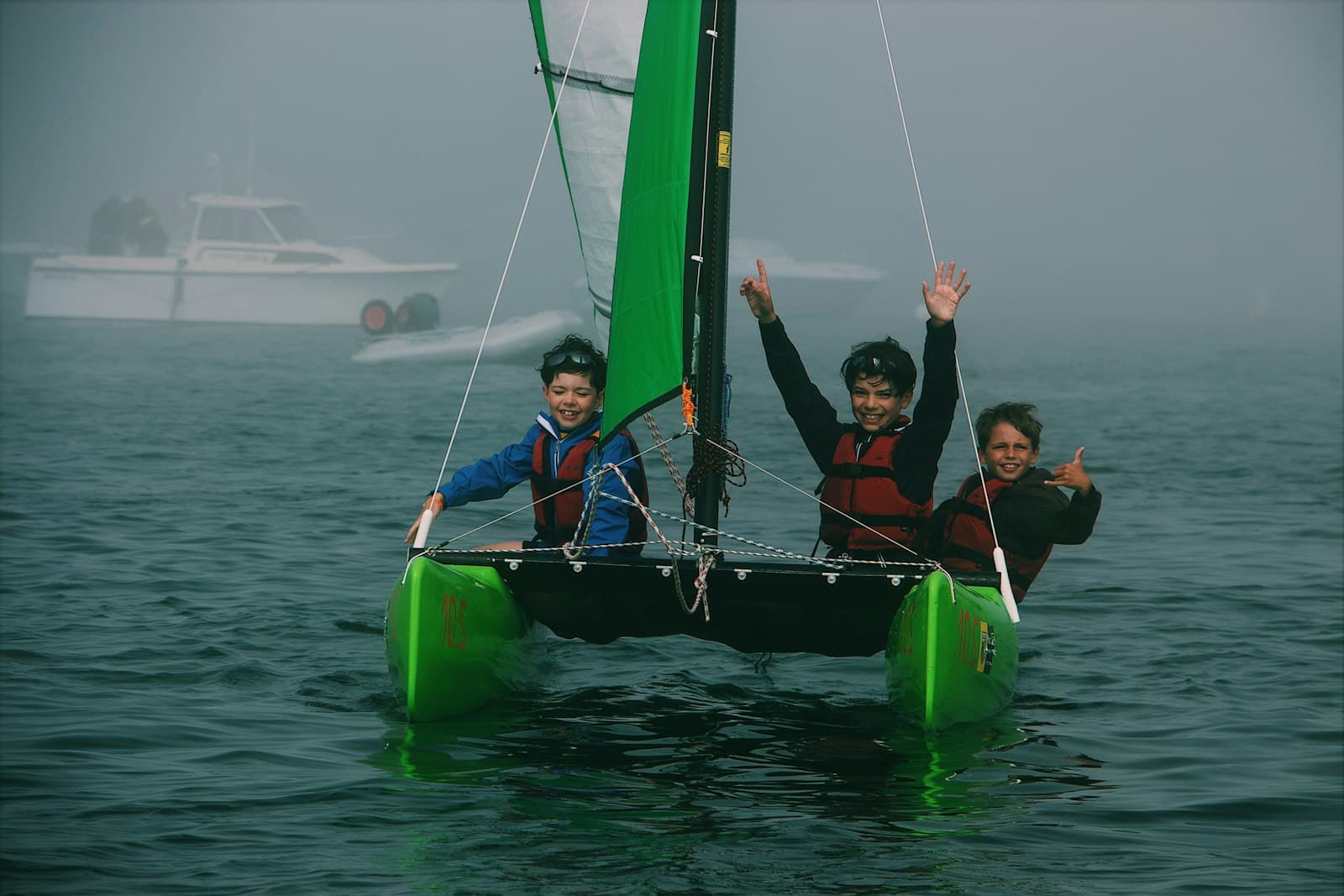
Child safety aboard comes down to one rule: prevent the fall rather than hope to recover it. Netting on the lifelines, a lifejacket whenever out of the cabin, a harness under way and non-negotiable rules cover most of the risk. For dogs and cats, three subjects shape the voyage: paperwork, daily needs and heat.
Prevent the fall, don't plan to catch it
A child overboard is the scenario every sailing parent wants to make impossible, not merely unlikely. The hierarchy of protection is clear: physical barriers first (netting, a securable companionway, no-go zones under way), then personal equipment (lifejacket, harness), and finally recovery procedures (man overboard) — which you hope never to run. The winning rules are simple and absolute: lifejacket outside, one hand for yourself and one for the boat, never alone on deck under way. Children respect stable rules remarkably well; it is the "just this once" exceptions that create danger.
Equipping the boat: netting, lifejackets, harnesses
Lifeline netting, stretched from pulpit to pushpit, is the best-value investment aboard with children: 150 to 400 euros fitted on a 40-footer, and it also catches toys and pets. For lifejackets, a child wears one matched to their actual size and weight — never "a bit big to last longer" — with a crotch strap and whistle; under way, add a harness clipped to a jackline or dedicated cockpit strong points. Our lifejackets and harnesses guide details the choices by age. Complete the setup with a bathing ladder always reachable from the water and, for older kids swimming at anchor, a clear swim code: defined zone, buddy system, an adult on watch.
Routines, sleep and school under way
Children handle cruising very well when their rhythm is respected: naps timed with passages, regular meals, playtime ashore every day when possible. Longer passages are planned around sleep — leaving at dawn while they are still sleeping remains the best trick of sailing parents. For school, long-term cruising families use distance-learning curricula or homeschooling frameworks, depending on their home country's rules; count 2 to 3 hours of lessons per day at primary level, with the rest of the syllabus happening in the open air: charts, weather, wildlife, landfalls, foreign currencies. Regularity beats volume: lessons every weekday morning, even in a paradise anchorage. Routine is what reassures children and moves them forward. One more point of vigilance: seasickness in children shows as silence and pallor before any complaint — watch for it and treat it early.
Dogs and cats aboard: paperwork, toilet and heat
Three realities structure life with a pet aboard. Paperwork first: in Europe, a pet passport, microchip and up-to-date rabies vaccination; some countries beyond require blood-titre tests or quarantine — check before you commit to a route. Daily needs next: a cat lives happily aboard with a litter tray; a dog must get ashore twice a day or learn to use an absorbent mat or synthetic grass on the foredeck — training to complete before departure, not mid-passage. Heat last: a deck in high summer burns paw pads, and animals do not sweat the way we do — permanent shade, unlimited water, and never alone in a closed-up boat. Add lifeline netting, a pet flotation vest with a lifting handle, and note the vets at your ports of call. Keep the animal's health records and any medication aboard in a waterproof pouch.
Choosing a boat that suits family life
Not all boats are equal with children: a deep, protected cockpit, high lifelines, a securable companionway and genuinely separate cabins change daily life. Catamarans appeal to families for their stability, trampoline and single-level living; monohulls offer a gentler budget and teach the sea differently. Our family boat guide compares the criteria in detail. With a pet, add two requirements: easy water access (transom platform, ladder) and non-slip surfaces where claws can grip. High freeboard helps at sea but complicates hauling a wet dog back aboard — test that manoeuvre once in calm water.
Where to start
- Fit the lifeline netting and cockpit strong points before the first family outing.
- Buy lifejackets with the children, at their real size, and have them test the jackets in a pool or off a beach.
- Set five rules maximum, absolute, posted in the saloon — and apply them to the adults too.
- For a pet: vet visit, paperwork, then a trial night aboard in the marina before letting go the lines.
- Start with short trips and sheltered anchorages: children's confidence is built in steps.
Frequently asked questions
From what age can you take a child on a boat?
There is no universal legal minimum age: families cruise with babies of a few months on coastal trips, in fair weather and over short distances. The real criteria are a lifejacket genuinely suited to the child’s weight (rare below 8-10 kg), secure sleeping arrangements aboard and an itinerary that respects their rhythm. You lengthen passages progressively, never the other way round.
Which lifejacket for a child on a boat?
A foam lifejacket (100 N minimum) chosen for the child’s actual weight, with a crotch strap so it cannot ride up, a head-support collar for the youngest and a whistle. Inflatable jackets are for older children who understand how they fire. Always test the jacket in the water: a child panicking in a badly fitted jacket is one more danger.
How does a dog relieve itself on a boat?
Two solutions: going ashore by dinghy twice a day — constraining but healthy — or teaching the dog to use a dedicated spot aboard, an absorbent mat or a patch of synthetic grass on the foredeck. That training takes weeks and must happen in the marina, before departure. Many dogs initially refuse to relieve themselves aboard: patience and systematic rewards win in the end.
The surest way to know a boat is to sail her.
Before you buy — or simply to get away this season. Tell us your dates and your cruising area, and we source the right boat through our network of owners and vetted fleets.