Boat anatomy: bow, stern, port and all the rest
Bow, stern, port, starboard, halyards and sheets: the essential boat vocabulary, zone by zone, with the memory tricks that make it stick for good.
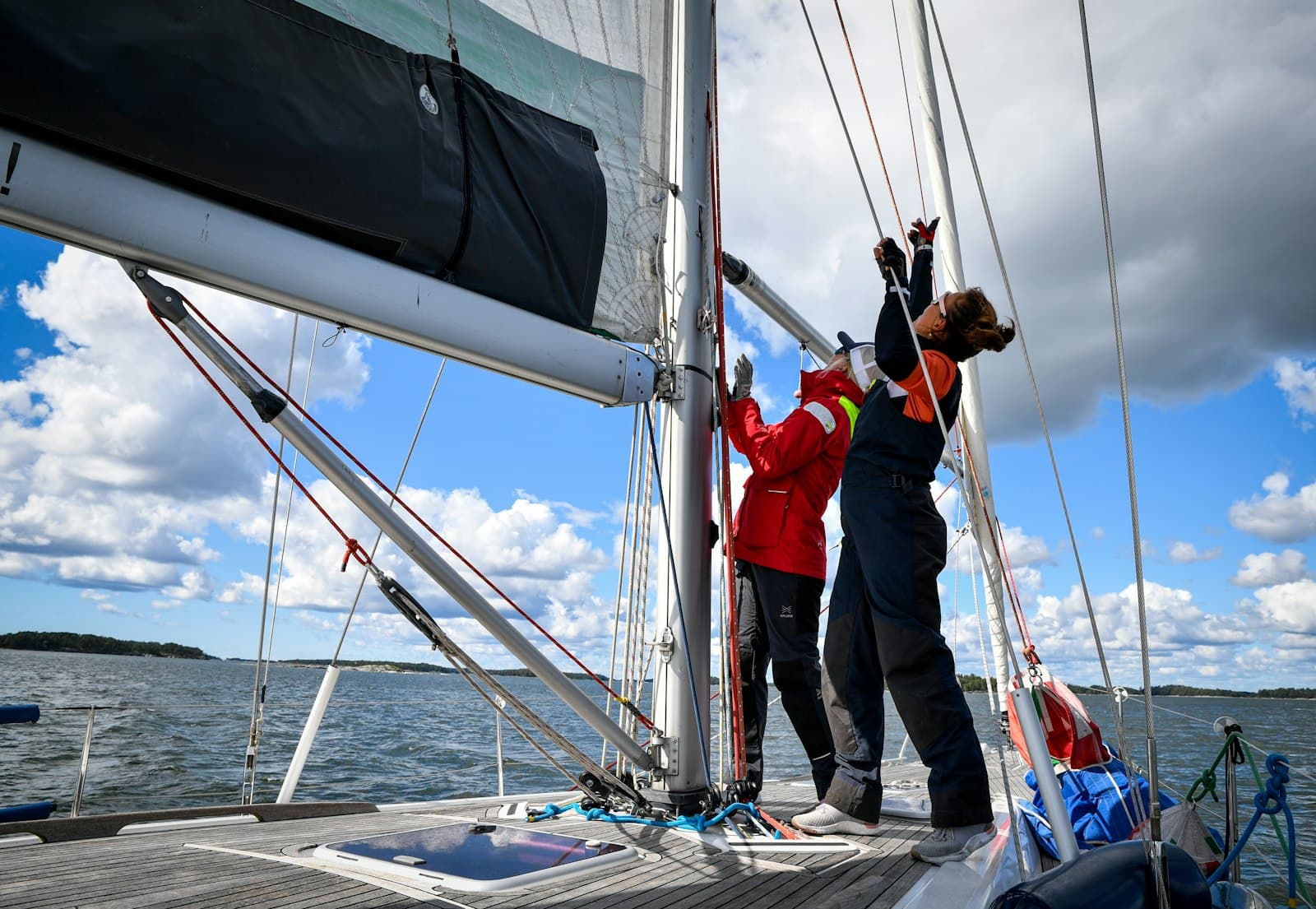
Aboard a boat, the front is the bow, the back is the stern, left is port and right is starboard — always as seen facing forward. This vocabulary is not folklore: it removes all ambiguity when you need to act fast, at night or over the noise of a manoeuvre. Here is the essential boat lexicon, organised zone by zone, with the memory tricks that make it stick within a season.
Port and starboard: getting oriented without hesitating
Port is the left side of the boat, starboard the right, for an observer facing the bow. Two memory tricks do the job for good: port has four letters, just like left; and port wine is red, like the port navigation light. That colour code is worldwide — red to port, green to starboard — which lets you deduce another vessel's heading from its lights at night.
Add the relative directions: windward is the side the wind comes from, leeward the opposite side; objects are also placed forward or abaft the beam. These few words describe any position around the boat without ever saying “on your left, behind you”.
The hull, from stem to transom
The hull reads from front to back. The stem is the forward edge that cuts the water; the bow, the whole forward zone. The transom closes the hull at the stern, often extended by a bathing platform. The waterline separates the underwater body — the immersed part, the one antifouling protects — from the topsides; the height between water and deck is the freeboard.
Below the water, the keel gives a sailboat its stability — some boats carry a lifting centreboard instead — while the rudder, driven by the wheel or tiller, provides steering. On a motor boat, propellers, sterndrives or pods replace the keel appendage, but a rudder or steerable drive still does the turning.
On deck: the vocabulary of boat handling
The deck concentrates most of the terms you need while manoeuvring:
- The cockpit: the protected living and steering space you handle the boat from.
- The foredeck: the deck area forward of the mast, around the ground tackle.
- The bow roller: the fitting at the stem that guides the anchor and its chain, recovered by the windlass.
- Cleats: the T-shaped fittings you belay mooring lines on; fairleads guide those lines outboard.
- Lifelines: the wires running around the deck, held by stanchions and closed off at the ends by the pulpit and pushpit.
- Winches: the geared drums that let you haul a line under heavy load.
Above all, remember that no line aboard is ever called a rope: every line is named after its job, and that is precisely what makes orders intelligible.
The rig, for sailors
The mast stands thanks to the standing rigging: forestay ahead, backstay behind, shrouds on the sides, spread by the spreaders. The boom, hinged to the mast, controls the mainsail; forward you unroll a genoa or staysail, and downwind a spinnaker or gennaker.
The running rigging covers the working lines, and two words handle 90% of situations: halyards hoist, sheets trim. You hoist the mainsail with its halyard and adjust the genoa with its sheet. Once that distinction clicks, manoeuvres become crystal clear — which is exactly the point.
Below decks: from companionway to bilge
You come below via the companionway, which leads to the saloon — the boat's living room, with its table and settees. The galley, compact and fitted with seagoing stowage, often sits next to the chart table, the traditional navigation station. Cabins occupy the ends of the boat, the forepeak being the most exposed to pitching at sea. The heads compartment houses a marine toilet whose pump and valves deserve to be understood before first use. Right at the bottom, the bilge holds tanks, batteries and the seacocks: the through-hull valves every competent crew member should be able to locate with their eyes closed.
Where to start: making the vocabulary stick
Nautical vocabulary is learned by mouth and by hand, not by rote. A few methods that work: name out loud whatever you touch on board; quiz the crew on port and starboard during the drive to the marina; read a listing or a spec sheet and look up every unknown term in the glossary; and before your first time out at sea, brief the crew with the proper words — cleat, spring, bow line — rather than with paraphrases. Within a season this lexicon becomes a second language; it will then serve you to compare the boat families and read listings like a professional.
Frequently asked questions
Why say port and starboard instead of left and right?
Because left and right depend on which way the speaker is facing, while port and starboard are fixed to the boat. “Fend off to starboard” means the same thing to the whole crew, whether each person faces forward or aft. During manoeuvres or at night, that lack of ambiguity prevents costly mistakes.
What is an easy way to remember port and starboard?
Two classics: port has four letters, just like left; and port wine is red, like the red port-side navigation light (green goes to starboard). Use the words out loud for a few outings and the reflex becomes permanent.
What is the difference between the bow and the stem?
The bow is the whole forward part of the boat, as opposed to the stern. The stem is more specific: it is the forward structural edge of the hull, the part that actually cuts the water. You stand at the bow; the stem slices the waves.
The surest way to know a boat is to sail her.
Before you buy — or simply to get away this season. Tell us your dates and your cruising area, and we source the right boat through our network of owners and vetted fleets.