Boat depreciation: the real numbers
A new boat loses 15-35% in three years and 40-55% in ten, depending on type. Sail, power and catamaran curves — and the levers that limit the loss.
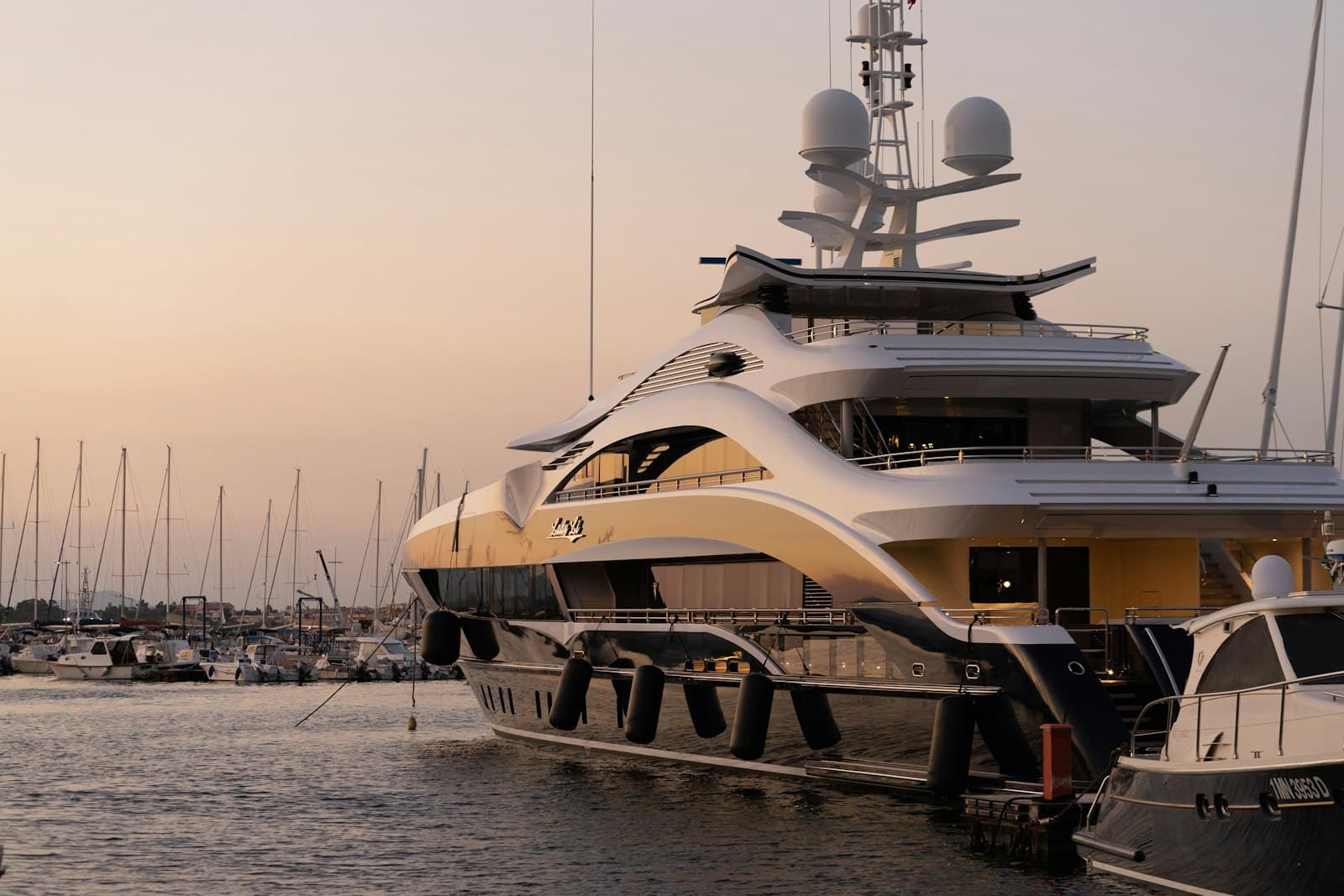
A new boat loses most of its value early: expect 15 to 25% depreciation over the first three years for a sailing monohull, 25 to 35% for a motor cruiser, 10 to 20% for a cruising catamaran buoyed by demand. At ten years, cumulative depreciation typically reaches 40 to 55% depending on the family, after which the curve flattens markedly. These figures are observed orders of magnitude, not a law: the model, the maintenance and the market cycle move every individual case.
The typical curves: sail, power, catamaran
Three families, three slopes. The sailing monohull depreciates most gently: roughly 15 to 25% at three years, 40 to 50% at ten, because its value rests on a hull and rig that age slowly when looked after. The motor cruiser falls faster — 25 to 35% at three years, 50 to 60% at ten — because its value is concentrated in engines with a finite life, and its styling dates faster. The cruising catamaran, supported by charter demand and long-distance sailors, holds up better: 10 to 20% at three years in normal market conditions. Small open boats and RIBs, a fast-renewal market, depreciate like motor cruisers. Understanding how a boat's market value is built helps place any given boat within its range.
The first step down is the steepest
The most brutal loss happens at the first resale: the moment a boat becomes second-hand, it gives up 10 to 15%, even nearly new, because the next buyer forgoes the full warranty, the choice of options and control over the delivery date. This is mechanical and incompressible. The practical consequence: buying a two-to-five-year-old boat means leaving that step — and usually the bulk of the teething problems — to the first owner. Conversely, whoever buys new should reason in terms of total cost of ownership over the holding period: our cost of ownership calculator builds this depreciation into the overall equation.
The model-year effect: it is the generation that counts
Unlike cars, the year of build matters less than the generation of the model. A boat does not drop because it gets a year older, but because the yard unveils its successor: the day the new version launches, every model year of the old one slides down a notch. The last model years of a series are often the most technically mature — faults corrected, equipment enriched — yet they are the ones that absorb the drop when the successor arrives. The first model years of a new model, meanwhile, iron out the teething faults. The rational slot: a mid-series model year, bought after the successor's launch, once the generation drop has been absorbed.
What accelerates depreciation
- Undocumented maintenance: without invoices and a log, the buyer assumes the worst and the price follows;
- ageing original equipment — outdated electronics, tired upholstery, original sails past eight years;
- repowering or rigging replacement on the horizon: the buyer deducts the quote, plus a peace-of-mind margin;
- divisive configurations: coloured hulls, unusual layouts, extreme draught all shrink the pool of buyers;
- a wave of ex-charter fleet exits of the same model in the same year, flooding the market.
Where the curve flattens — and why the market can lie
Past ten or twelve years, annual depreciation falls to 2 or 3%, then the price stabilises around 20 to 30% of the as-new value of a recent equivalent — at that point condition, more than age, sets the price. And the curve is not a law of physics: between 2020 and 2022, the shortage of new boats pushed second-hand prices up, with some owners reselling at their purchase price after two seasons. The anomaly has unwound, but it is a reminder that depreciation is measured over a full cycle, not over two years. Some models structurally hold their value better: wide distribution, a durable builder, a timeless programme.
Limiting depreciation: five concrete levers
First lever: buy already depreciated, between two and five years old, and leave the first step to someone else. Second: choose a liquid model from a solid yard in a sought-after size — liquidity protects better than rarity. Third: document every intervention from day one; a complete binder of invoices is worth thousands at resale. Fourth: equip sensibly, and time electronics purchases within the two years before selling. Fifth: sell before the big milestones — repowering, rigging, upholstery refit — rather than after a quote the buyer will deduct anyway. And build depreciation into what your boat will really cost from the day you buy: it is often the single largest real cost of the first five years, ahead of berthing and maintenance.
Frequently asked questions
How much does a new boat depreciate in the first year?
Expect 10 to 15% the moment the boat becomes second-hand, even with very few hours. The next buyer gives up the full warranty, the choice of options and a controlled delivery date: that step is mechanical. It is smaller on high-demand catamarans and larger on heavily optioned motor cruisers, whose extras resell poorly.
Do catamarans depreciate less than monohulls?
Yes, in percentage terms: charter and bluewater demand supports prices, with roughly 10 to 20% depreciation at three years against 15 to 35% for sailing or motor monohulls. But the entry ticket is higher: in absolute money, the loss can be comparable. And the advantage depends on the charter market cycle.
At what age does a boat stop depreciating?
Past ten to twelve years, annual depreciation drops to 2 or 3%, then the price stabilises around 20 to 30% of the as-new value of a recent equivalent. At that stage condition sets the price: a twenty-year-old boat, refitted and documented, sells well above a neglected sistership — sometimes double.
Reading is the easy part. Then you have to decide.
A boat purchase turns on what you cannot see: the real history, the state of the hull below the waterline, how much room there is to negotiate. We represent you — independent of any seller, paid by you alone.