Boats that hold their value (and why)
Yard reputation, scarcity, charter demand and documented upkeep: the four factors behind strong resale values, with concrete examples by category.
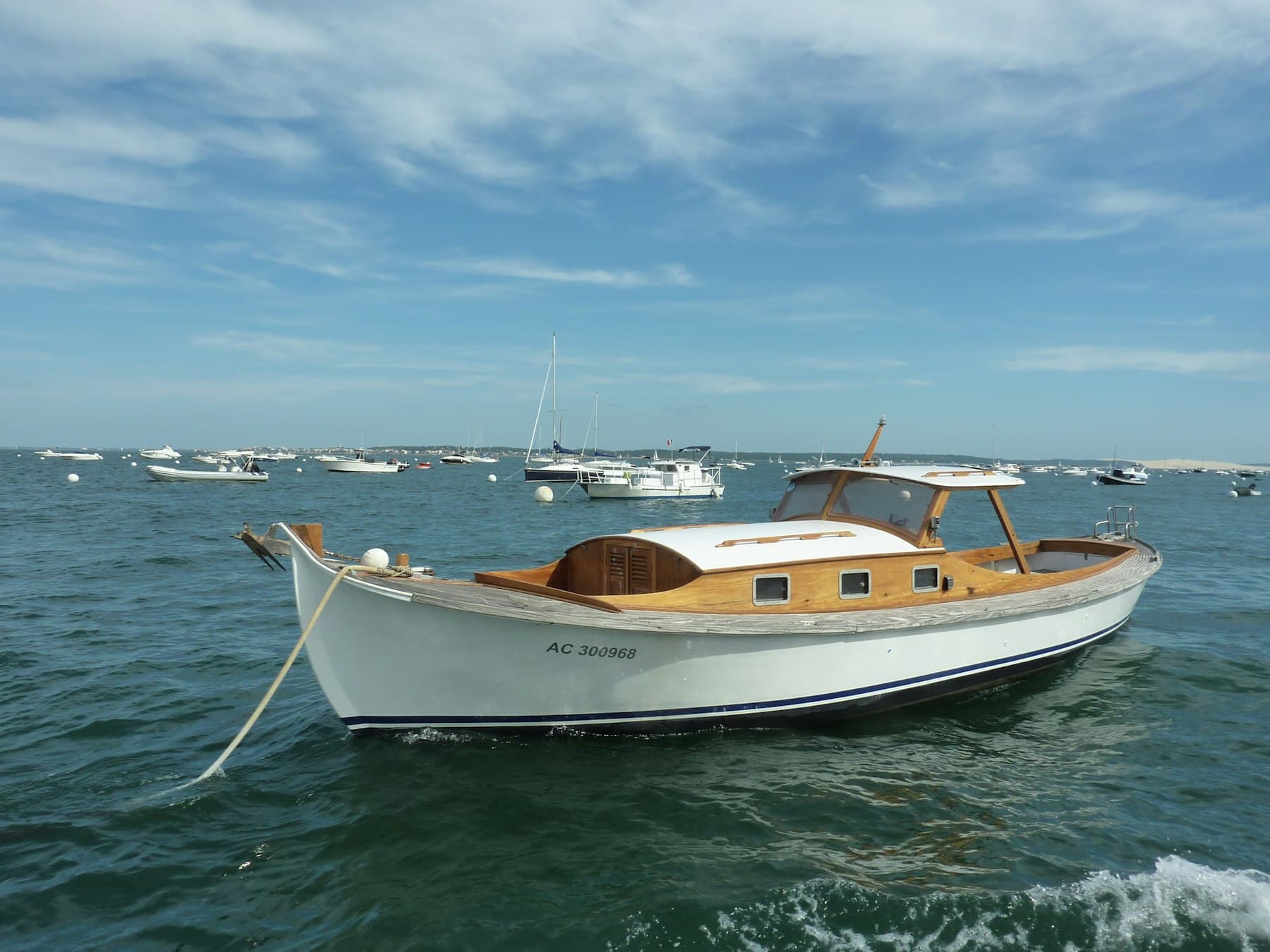
A boat holds its value when four factors combine: a builder with a solid reputation, relative scarcity on the used market, sustained demand — often fuelled by the charter industry — and a spotless maintenance history. No production boat durably gains value, but some lose half as fast as others, and sell in weeks where others sit for two years.
What "holding value" actually means
Numbers before brands. A mass-produced boat typically loses 40 to 50% of its value over ten years; the best-placed models manage 25 to 35% over the same period. The gap looks modest in percentage terms and enormous in money: on a boat bought for 300,000 euros, that is 40,000 to 60,000 euros of difference at resale. Add a factor sellers forget: liquidity. A sought-after boat sells at market price within two or three months; an obscure one gets negotiated down after eighteen months of listings. The detailed mechanics of this erosion are quantified in our guide to boat depreciation. Liquidity and residual value feed each other: buyers pay more for boats they know they can resell easily, which keeps demand deep and prices firm.
Builder reputation, the first factor
For an equivalent programme, the builder's name weighs more than any option. A reputable yard reassures the next buyer on three concrete points: initial build quality, availability of parts and dealer network, and accumulated knowledge — the known weaknesses of a widely built model are documented, therefore predictable. That is why Nordic-built sailing yachts, certain highly regarded trawlers or top-tier RIBs cross the decades with firm values. Where the line sits between premium and volume builders, and what it means at resale, is dissected in our comparison of premium versus volume brands. Resale statistics confirm it year after year: the badge on the hull remains the single most reliable predictor of residual value.
Scarcity that protects prices
Second factor: the balance of supply and demand. A yard that builds few boats, with waiting lists, mechanically creates a tight used market — the impatient buyer pays close to new price to skip a two-year wait. The same logic applies to discontinued models that people still want: when a cult boat has no true successor, its value resists. Be careful, though, not to confuse scarcity with obscurity: an overly exotic boat — defunct builder, unusual design, orphaned engine — is rare too, but its market is narrow. Scarcity only protects prices where demand exists. Before assuming a boat is rare in the valuable sense, count how many comparable examples are actually for sale: the listings tell you more than the brochures ever will.
The charter effect: reassuring standardisation
Charter plays a paradoxical role. The catamarans and monohulls favoured by rental fleets are built in high volumes, which pulls their depreciation towards the average. But that massive distribution creates a global, liquid and transparent market: prices are known, buyers are numerous, sale times are short. A charter-standardised model resells quickly and without surprises — which is a form of value in itself. At the opposite end, trawlers and character boats play the other card: a narrower market, but strong attachment and stable values for well-maintained examples.
Examples by category
A few profiles that hold up well, maintenance being equal:
- Bluewater sailing yachts from reputable builders, where demand structurally exceeds the supply of sound used examples.
- Recent cruising catamarans, carried for years by demand outstripping production.
- Quality trawlers and pilothouse cruisers, bought by careful owners and sold late.
- Premium day boats and high-end RIBs, whose summer market is very active.
Conversely, faster depreciation hits generic heavily powered sports cruisers (constant range renewals crush older models), over-customised boats, and units where ageing outboard engines represent half the value.
How to buy with resale in mind
Residual value is built on purchase day:
- Choose a model in demand within its category, not a curiosity — check the number of comparable listings and how long they take to sell.
- Favour the standard engine option for the model: it is the next buyer's first filter.
- Stay consensual on colours and layouts; extreme personalisation is paid for twice, at purchase and at resale.
- Keep a complete maintenance log from day one: invoices, winterisations, replacements. A spotless file can be worth several points of value.
- Before signing, position the model against its real market value with our guide to how boat valuations work.
A boat will never be an investment, but chosen well and documented well, it can give half the money back.
Frequently asked questions
What type of boat resells best?
Boats from reputable builders with sustained demand: Nordic bluewater sailing yachts, recent cruising catamarans, quality trawlers and premium day boats. The common thread is not the category but the supply-demand ratio: a sought-after model with the standard engine and a documented history sells fast and close to its market value.
Can a boat gain value over time?
Durably, almost never for a production boat. Temporary rises do happen — new-boat shortages, waiting lists, discontinued cult models — and some pedigree classics appreciate, but their upkeep costs generally absorb the gain. Think in terms of minimal depreciation, not capital gain.
Does maintenance really affect resale price?
Yes, twice over. A complete file — invoices, winterisations, dated replacements — justifies a top-of-range price and speeds up the sale, because it lowers the buyer's perceived risk and simplifies the survey. Conversely, a patchy history almost always triggers downward negotiation, even when the boat itself is sound.
Reading is the easy part. Then you have to decide.
A boat purchase turns on what you cannot see: the real history, the state of the hull below the waterline, how much room there is to negotiate. We represent you — independent of any seller, paid by you alone.