Europe's pre-owned market: where to look, where to buy
Med, Greece, the Baltic: where to shop for a pre-owned boat in Europe, the real regional price gaps, and the cross-border pitfalls to avoid before buying.
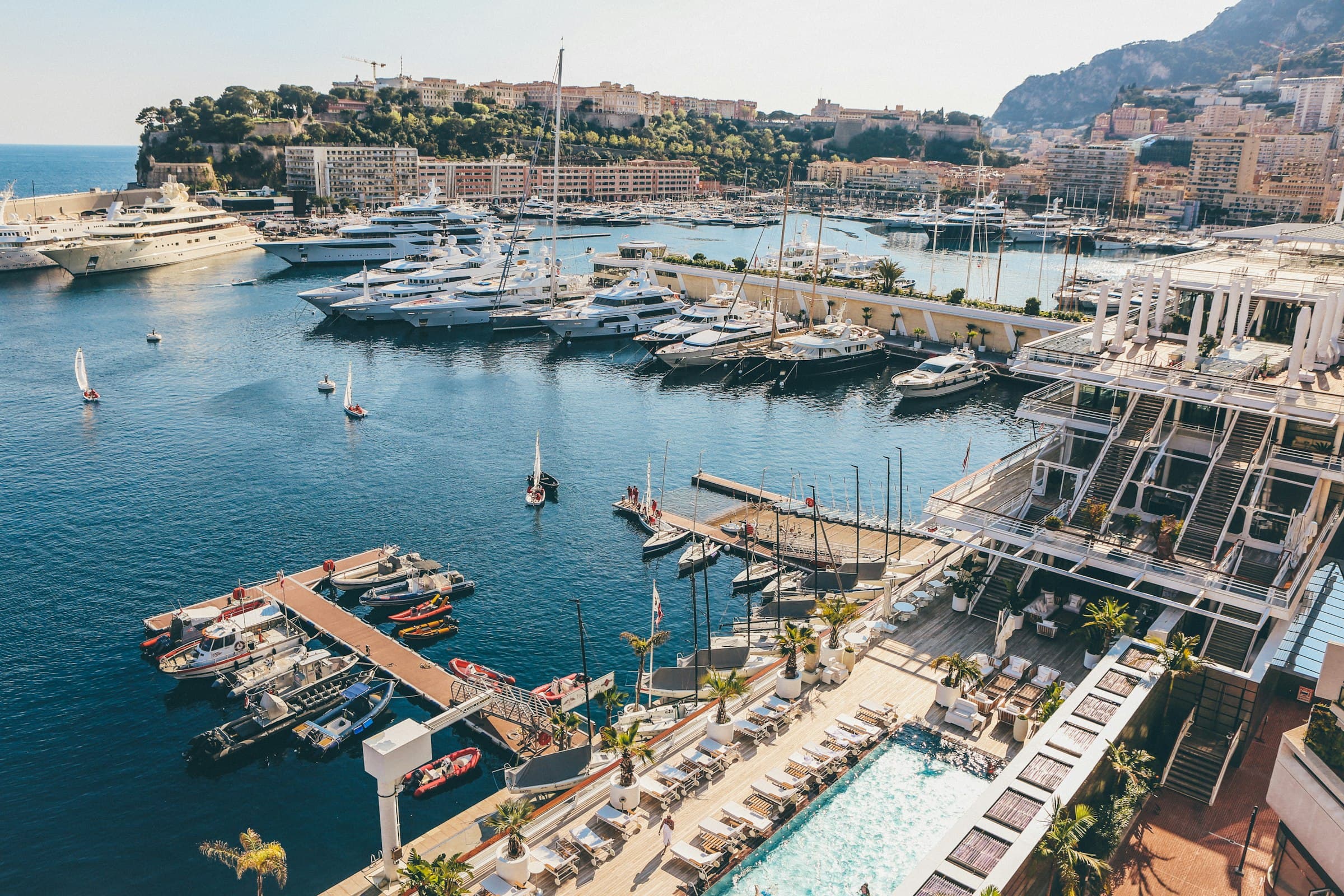
Europe's pre-owned boat market splits into three main basins: the French-Italian-Spanish Mediterranean for volume and choice, Greece and Croatia for recent ex-charter boats, and the Baltic and North Sea for lightly used boats at contained prices. Where you should buy depends less on any supposed bargain than on the type of boat you want, your tolerance for distance, and your discipline on tax status and registration.
Three basins, three market logics
Europe hosts one of the world's largest recreational fleets and its densest used-boat market: tens of thousands of listings active at any moment. But the market is far from uniform. The Mediterranean is dominated by owners' boats, often heavily equipped, sun-exposed and used a few weeks a year. In Greece and Croatia, charter fleets renew their units every five to seven years, feeding the market with recent sailing yachts and catamarans. On the Baltic and the North Sea, short seasons and systematic winter storage ashore produce boats with low engine hours. Understanding these three profiles keeps you from comparing listings that are not comparable. Prices follow the same logic: the identical five-year-old cruiser can carry noticeably different asking prices depending on which basin it sits in, and on who owned it there.
The French, Italian and Spanish Med: maximum choice
From the Riviera to Liguria and the Balearics, listing density is the highest in Europe across every category, with motor boats dominating. The advantages are real: huge choice, brokers and yards close at hand, traceable history, easy sea trials. Asking prices, however, are the highest on the continent, and UV exposure marks gelcoats, upholstery and exposed electronics. Before negotiating, position the model against its real market value: our guide to how boat valuations work explains the method. For the same model and year, a 10 to 15% gap between two Mediterranean coastlines is nothing unusual.
Greece and Croatia: the ex-charter pool
The charter hubs of Athens, the Cyclades, Split and Dubrovnik return hundreds of four-to-seven-year-old sailing yachts and catamarans to the market every year. Initial depreciation already absorbed, prices often 15 to 25% below an equivalent owner's boat, professionally documented maintenance: the offer is attractive, provided you accept marked interior wear and high engine hours. The subject deserves its own examination — our guide to buying an ex-charter boat covers the traps. Above all, an ex-charter is bought on paperwork: fleet maintenance logs, invoices, and an independent survey every time.
Baltic, Netherlands and Scandinavia: preserved boats
Four-to-five-month seasons, covered winter storage ashore, famously meticulous owners: northern Europe offers remarkably well-preserved boats, notably Scandinavian-built sailing yachts and Dutch steel cruisers. Asking prices frequently run 10 to 15% below Mediterranean levels for a comparable model. The real issue is getting the boat home: road transport — several thousand euros beyond 10 metres, more for wide beams — or a delivery trip of several weeks with professional crew, fuel and specific insurance. Build that cost into your comparison from the start, or it will erase the saving on the purchase price.
Tax, registration, survey: the cross-border traps
Trap number one is the boat's tax status. Within the EU, a pleasure boat must be able to prove VAT was paid: demand the original invoice or a formal attestation, especially for boats that have cruised outside the EU or come out of a lease scheme. Ambiguous situations — return after a long absence, tax paid in a third country — must be validated by a professional before you commit, never after. If you are buying from outside the EU, the equivalent import and tax rules of your own flag state apply, and they vary widely. Then come re-registration under your flag, with its fees and delays, differing safety-equipment standards, and the language barrier on contracts. Specialist support earns its keep on a cross-border deal: that is exactly what our yacht buying service exists for.
Where to start your search
Proceed in stages rather than on impulse:
- Define the programme, then the full budget: purchase price, delivery, refit and first year of ownership, modelled with our cost of ownership calculator.
- Compare the same model across all three basins to establish the real price gaps, delivery included.
- Shortlist remotely on a complete file: invoices, maintenance log, proof of tax status, dated recent photos.
- Group viewings by basin to limit travel, and never buy without an independent survey carried out on the spot.
- Lock down the paperwork — tax evidence, deregistration, bilingual contract — before paying any deposit.
A boat bought well 1,500 kilometres away often beats an overpaid compromise in the marina next door, provided you have priced the distance honestly.
Frequently asked questions
Which European country has the cheapest used boats?
Greece and Croatia show the lowest prices on recent sailing yachts and catamarans thanks to charter fleet renewals, often 15 to 25% below the owner-boat market. Northern Europe is competitive on well-kept private boats. But the real comparison must include delivery and refit costs: the headline gap often shrinks by half once everything is counted.
Can you buy a used boat in another EU country without paying VAT again?
In principle yes: a boat on which VAT was already paid in the EU can be resold between private parties without new taxation. Everything rests on the proof — original invoice or formal attestation. Ambiguous cases (lease schemes, long stays outside the EU, tax paid in a third country) must be validated by a professional before signing, and rules differ under other flag states.
How do you bring home a boat bought abroad?
Two options: road transport, practical up to roughly 12 to 14 metres and costing several thousand euros depending on distance and beam, or a delivery by sea with a professional skipper paid by the day, plus fuel, flights and provisioning. In both cases, confirm your insurance covers the transfer before departure.
Reading is the easy part. Then you have to decide.
A boat purchase turns on what you cannot see: the real history, the state of the hull below the waterline, how much room there is to negotiate. We represent you — independent of any seller, paid by you alone.