Superyachts: the economics of another world
Crew, refits, charter management: why a superyacht costs roughly 10% of its value every year, and how this extraordinary economy really works.
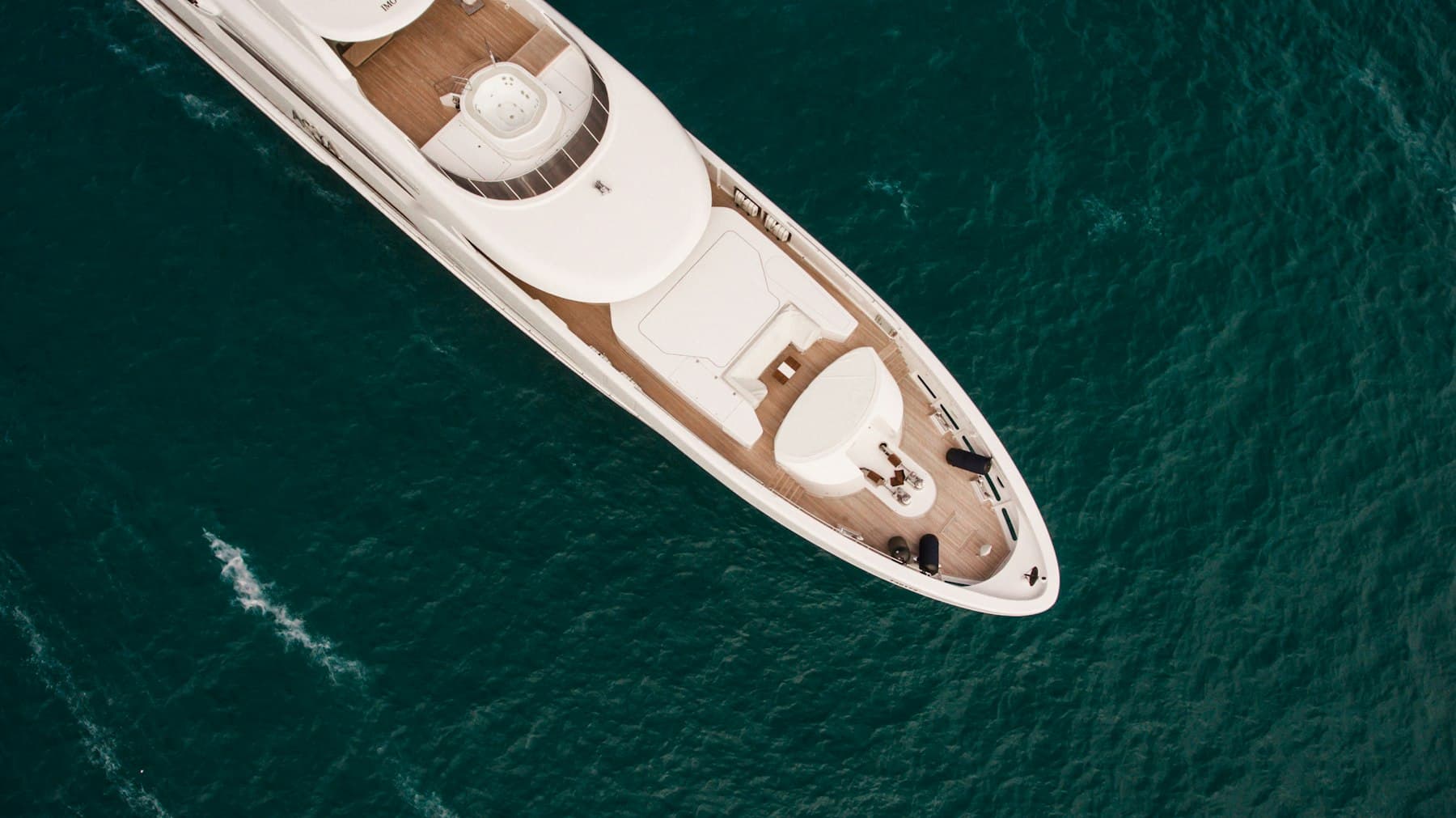
A superyacht — beyond 30 metres — costs roughly 10% of its value every year to run: crew, maintenance, insurance, fuel, berthing. For a 50-metre worth 30 million euros, budget 2.5 to 3 million euros a year, before any refit. This 10% rule, openly assumed across the industry, explains why superyacht economics have nothing in common with the rest of boating: this is no longer a boat, it is a floating business.
Where the superyacht begins
The usual threshold sits around 24 metres — the regulatory line beyond which most flag states require professional crew and commercial-grade compliance — and the term truly applies beyond 30 metres. The global fleet remains tiny by boating standards: a few thousand units over 30 metres, built mostly in a handful of countries. This small world has its own yards, ports, crews and rules, which we map in our overview of superyachts. Its defining feature: every additional metre grows costs faster than length, because it adds volume, systems and crew members. Beyond 45 to 50 metres, costs step up again: heavier regulation, larger crews, and a shrinking list of marinas physically able to take the boat.
The 10% rule, broken down
The order of magnitude is easy to remember; its composition less so. On a typical large-yacht annual budget:
- Crew absorbs 40 to 50% of the total: salaries, social charges, food, uniforms, training, rotation flights.
- Routine maintenance and consumables take 20 to 25%: a superyacht is maintained continuously, not at winter haul-out.
- Insurance runs in the order of 1% of the yacht's value per year.
- Fuel and berthing vary enormously with the programme: a Mediterranean-Caribbean season with crossings quickly means hundreds of thousands of euros in diesel.
The logic is the same as everywhere in boating — only the scale changes, as our guide what a yacht really costs shows.
The crew: a small floating company
A 50-metre typically employs 10 to 12 people year-round: captain, first officer, chief engineer, chef, stewardesses, deckhands. All are housed, fed, insured and trained to international professional standards, with rotations to survive the seasons. A large-yacht captain's salary commonly reaches six figures a year; the full payroll of a 50-metre frequently exceeds a million euros annually. It is the most rigid line in the budget: a yacht at the dock costs almost as much as a yacht at sea, because the crew stays aboard to maintain, watch and prepare the next season.
Refits: the appointment that makes or breaks value
Every five to ten years, a superyacht spends several months in a yard for a refit: full paint job, machinery, systems, interiors, compliance updates. The bill commonly reaches 10 to 25% of the yacht's value — the paint job alone on a 50-metre runs to hundreds of thousands of euros. This appointment is not optional: classification societies impose periodic surveys, and the market brutally punishes yachts with postponed refits. A thorough, documented refit protects resale value; a dodged one turns the yacht into a money pit for the next buyer, who knows it and negotiates accordingly.
Charter: a shock absorber, not a business
Chartering your yacht out looks like the obvious answer. Reality is more sober: a week's charter on a 50-metre does invoice at 150,000 to 300,000 euros, but you must deduct broker and management commissions — often 20 to 30% combined —, accelerated wear, the regulatory burden of commercial operation and the weeks the owner loses access. In most cases, an active charter programme covers part of the fixed costs, rarely all of them. Owners who charter successfully treat the yacht as a semi-commercial operation, with a professional manager, a marketing plan and realistic expectations set from the outset. As for the tax structures tied to commercial operation, they are complex and shifting: have them validated by specialist advisers, never on the strength of a brochure.
What to remember before dreaming bigger
Three reflexes to keep a cool head:
- Think in ten-year ownership cost: purchase price + roughly 10% per year + one major refit — broadly, the initial outlay doubles over a decade.
- Model your own scale with our cost of ownership calculator: the mechanics hold for a 12-metre as for a 50.
- If your use is seasonal, compare honestly with occasional charter: renting three superyacht weeks a year costs a fraction of ownership, with no crew to manage.
The superyacht is an economy of assumed passion. The owners who live it well are the ones who accepted the numbers before signing.
Frequently asked questions
How much does a superyacht cost to maintain per year?
The industry's accepted order of magnitude is 10% of the yacht's value per year, all included: crew, maintenance, insurance, fuel, berthing. A 40-metre worth 15 million euros therefore costs around 1.5 million a year; a 50-metre worth 30 million, between 2.5 and 3 million. Periodic refits come on top of this running budget.
Can a superyacht be profitable through charter?
Almost never in the sense of a net profit. Charter income — even at 150,000 to 300,000 euros a week for a 50-metre — is eaten by commissions, accelerated wear and the constraints of commercial operation. A good charter programme reduces the cost of ownership, sometimes substantially, but it does not turn the yacht into a profitable asset.
How many crew does a superyacht need?
Reckon roughly one crew member per five metres beyond 30 metres: a 35-metre runs with 5 to 7 people, a 50-metre with 10 to 12, a 70-metre with 15 to 20. Numbers depend on volume, programme and flag state requirements; commercial charter operation often demands higher qualifications and larger crews.
Reading is the easy part. Then you have to decide.
A boat purchase turns on what you cannot see: the real history, the state of the hull below the waterline, how much room there is to negotiate. We represent you — independent of any seller, paid by you alone.