Gelcoat, teak, upholstery: keeping a boat immaculate
Freshwater rinses, an annual polish, gentle teak care and UV covers: the simple routines that keep a boat immaculate without eating your weekends.
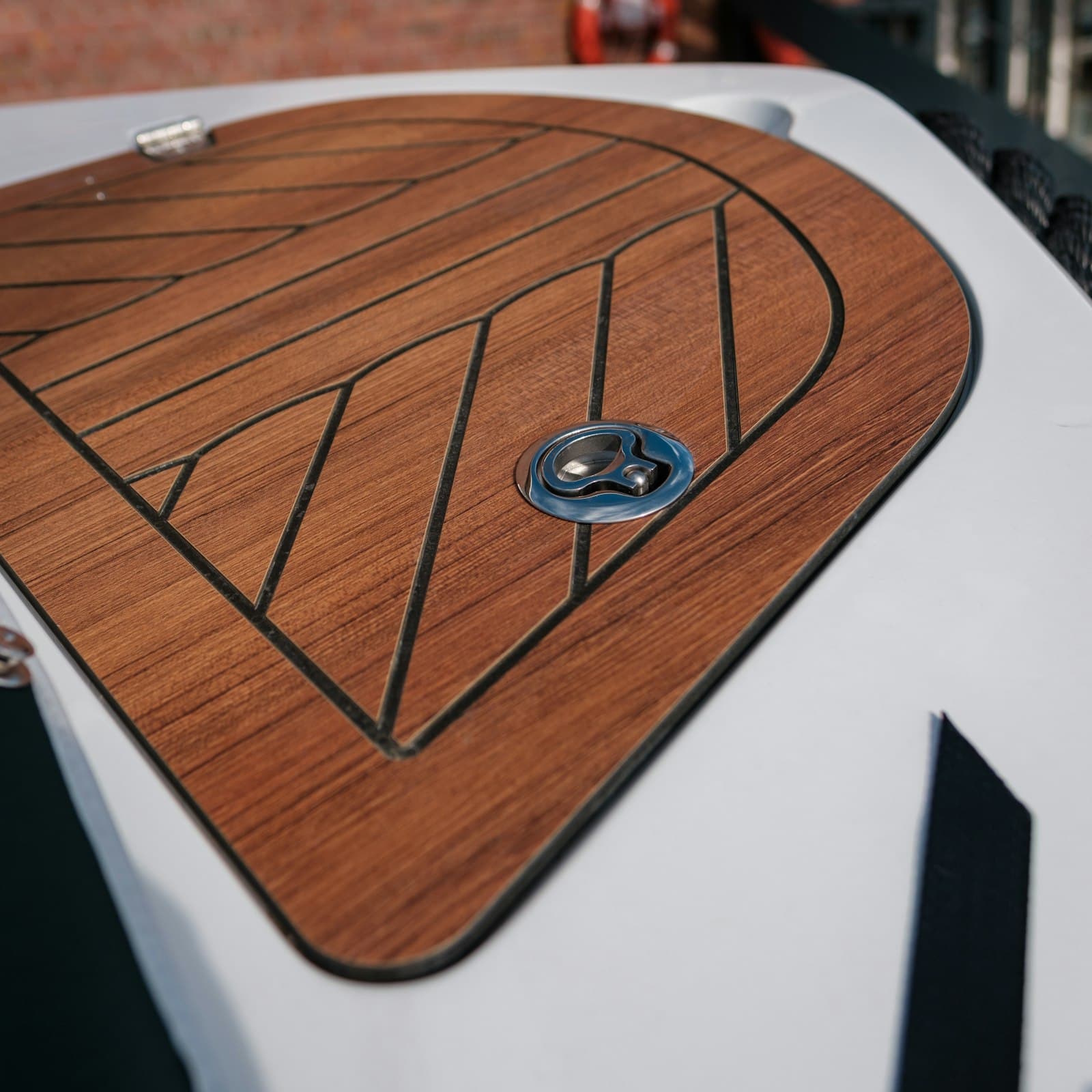
Keeping a boat immaculate does not require sacrificing your weekends — it requires three routines matched to three materials: gelcoat rinsed with fresh water and shielded by an annual coat of wax, teak washed gently — never with a pressure washer —, and upholstery defended against UV and trapped moisture. Light, regular care always beats heroic catch-up sessions.
Gelcoat: wash often, protect once a year
Gelcoat is not paint: it is a thin layer of resin, 0.5 to 0.8 mm, that protects the laminate and gives the hull its gloss. Slightly porous at the surface, it holds salt, absorbs grime and chalks under UV. The winning routine is simple: a freshwater rinse after every outing, a pH-neutral boat soap once a month, and a gentle polish plus wax in spring. Wax is the real shield: it fills the pores, makes water bead and blocks UV. Avoid aggressive degreasers and washing-up liquid, which strip the wax with every wash — that is the classic vicious circle: the harder you clean, the faster the hull gets dirty again.
Reviving dull gelcoat without sacrificing it
When the surface chalks — a white powder comes off on your hand — it is time to compound: a mildly abrasive polish, then an orbital machine with the right foam pad, and a protective wax to finish. Allow EUR 100-200 in products plus a EUR 150-400 machine if you do it yourself, or EUR 800-2,500 for a full professional buffing depending on size and condition. Keep one thing in mind: every compounding session removes material. A gelcoat will take two or three serious restorations in its life; after that it becomes too thin and painting is the only option — EUR 5,000-15,000 for a 40 ft hull. Hence the value of the annual wax: it pushes back the day of heavy polishing by years.
Teak: washing it without wrecking it
Teak wants water — seawater ideally, as salt slows down micro-organisms — and a soft brush, always across the grain. Two absolute bans: the pressure washer, and scrubbing along the grain, both of which tear out the soft fibres and hollow the wood. A modern laid deck is only 5 to 9 mm thick: every assault shortens its life, and a full replacement runs to tens of thousands of euros. For greasy stains and dirty grey, a two-part teak cleaner works miracles, but once or twice a year at most: it is a chemical treatment, not a weekly shampoo.
Silver, oiled or sealed: pick your teak doctrine
The silver-grey of bare teak is not a defect: it is the wood's natural patina, decent protection, and zero maintenance. Oil gives you three months of golden teak, then darkens, traps dirt and commits you to endless re-coating. Modern sealers hold up better and age more gracefully, at the price of one careful annual application on clean, dry wood. Varnish belongs on interior joinery and coachroof trim: on a deck it is slippery and it flakes. The real advice is this: choose a doctrine — honest grey or disciplined sealer — and stick to it. Switching back and forth is expensive in products, hours and wood.
Upholstery and canvas: the two enemies to keep out
Upholstery dies of two things: UV, which cracks vinyl and fades fabric, and trapped moisture, which brings mould and odours. The counter-measures are well known:
- Covers on everything that lives outside, even in winter at the dock.
- Mild soap and a UV protectant two or three times a season on vinyl.
- An annual waterproofing spray on exterior fabrics.
- Systematic ventilation: cushions stood on edge, linings aired, a dehumidifier during winter lay-up.
Watch the stitching too: polyester thread dies of UV before the fabric does, and re-stitching costs a fraction of replacement. An upholsterer will re-stitch a full cockpit set for a few hundred euros — wait until it all tears and the invoice changes scale.
Where to start
- Set up the ten-minute post-trip routine: full freshwater rinse, a chamois over the stainless, cushions aired.
- In spring: deep wash, polish and wax the gelcoat, re-waterproof the canvas.
- In autumn: full clean, covers on, dehumidifier in, and cushions home if you can.
- Budget EUR 300-800 a year in products and consumables for a 33-40 ft boat you maintain yourself — a line of its own in the cost-of-ownership calculator.
- If the catch-up work exceeds your skills or your time, price up a professional before things tip over: a badly neglected boat is a refit job, not a maintenance one.
Frequently asked questions
How do you revive dull, chalky gelcoat?
If the surface chalks, use a mildly abrasive polish followed by a protective wax, applied with an orbital machine for an even result. Allow EUR 100-200 in products if you do it yourself, or EUR 800-2,500 for a professional buffing. Remember that every compounding removes material: a gelcoat will only take two or three such restorations in its life.
Can you clean a teak deck with a pressure washer?
No, never. High pressure tears out the soft fibres and hollows the deck, which is only 5 to 9 mm thick. Wash with water and a soft brush, across the grain, and keep two-part teak cleaners to once or twice a year at most.
Should you oil the teak on a boat?
It is not necessary: the silver-grey of bare teak is a protective patina that needs no upkeep. Oil gives a handsome golden look but traps dirt and must be renewed endlessly. If you want golden teak, a modern sealer applied once a year is the better route — and whichever doctrine you choose, stick to it.
Your boat can pay for its own berth.
A few chartered weeks a year are often enough to cover the berth and the maintenance. Vetted charterers, secured deposits, and your rules — you keep the calendar.