Standing rigging: inspect, tune, replace
Standing rigging lasts 10 to 15 years. Here is how to inspect it, what replacement really costs, and why your insurer may demand proof of its age.
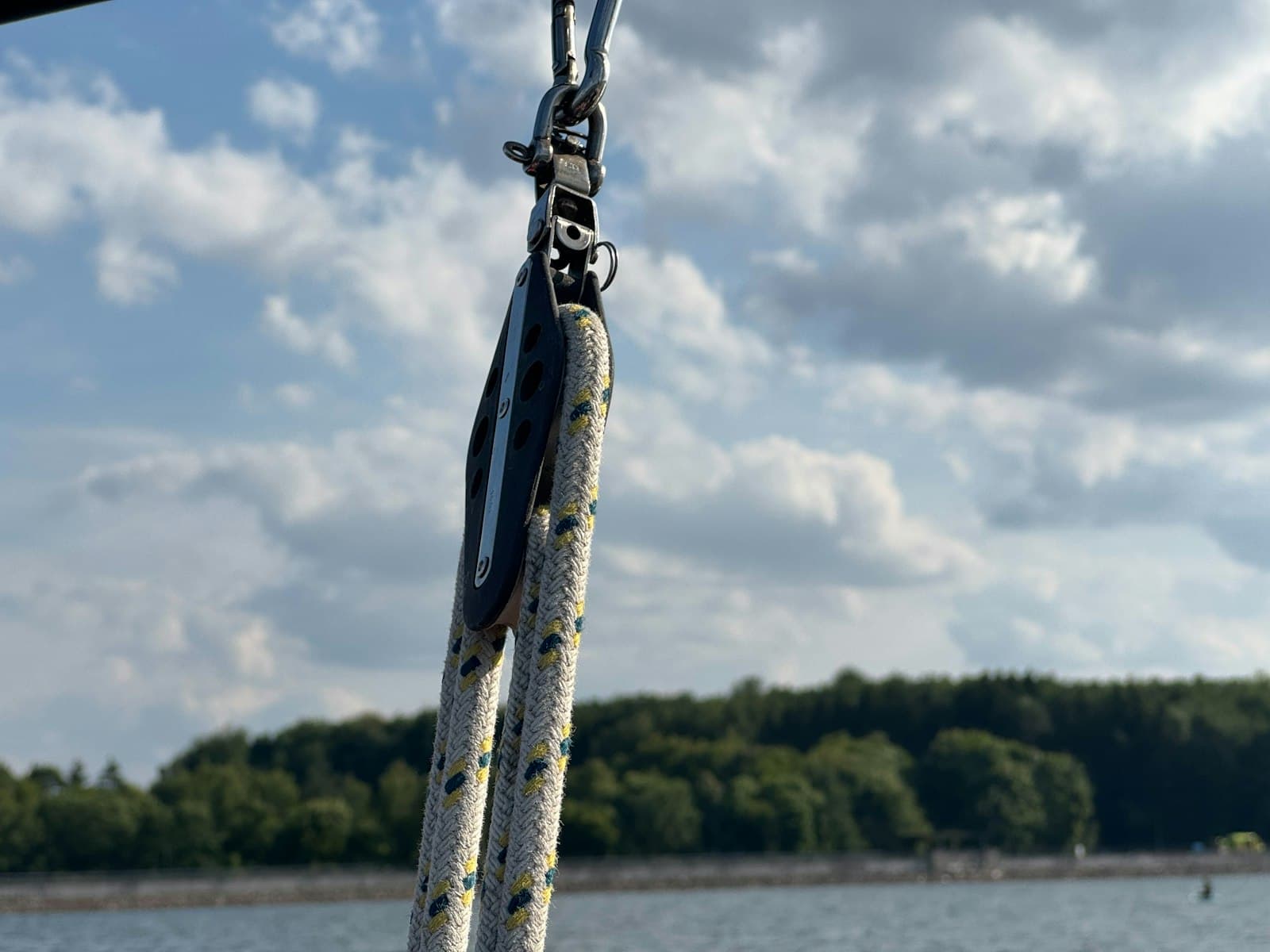
Standing rigging is the set of fixed wires and rods that hold up a sailboat's mast: forestay, shrouds, lower shrouds, backstay. Its commonly accepted service life is 10 to 15 years, or roughly 20,000 to 40,000 miles depending on how hard the boat is used. Beyond that window, riggers and insurers recommend — and increasingly require — a full replacement, even when nothing looks wrong to the naked eye.
What it is, and why it ages
Standing rigging is the counterpart of running rigging — halyards and sheets, which move constantly. On the vast majority of cruising yachts it is 1x19 stainless steel wire with swaged terminals; racing and high-end boats use rod rigging or high-modulus textile stays. The full vocabulary lives in our glossary, and the bigger picture in our guide to sails and rigs.
The trouble with standing rigging is that it dies silently. Fatigue accumulates with every load cycle, and crevice corrosion works away inside the swages, precisely where no eye can reach. Hot, salty climates, hard sailing and long spells on exposed moorings all shorten its life. A shroud can look perfect and let go in the first serious squall — and a rigging failure usually ends in a dismasting.
The inspection points before every season
A methodical check at the start of the season catches most of the warning signs. Allow an hour, and bring a magnifying glass and a rag:
- Broken strands: a single wire sticking out near a terminal condemns the whole stay, no debate.
- Hairline cracks or rust weeping on swages and end fittings — the magnifier reveals them long before the naked eye does.
- Turnbuckles: clean, greased threads, split pins in place, nothing seized that you have to force.
- Chainplates and clevis pins: abnormal play, distortion, damp staining in the surrounding deck.
- At the masthead: sheaves, pins, forestay and backstay attachments — go up in a bosun's chair once a year.
Photograph anything doubtful: comparing pictures year on year tells you more than any single inspection ever will.
Tuning: slack rigging ages faster
It is counter-intuitive, but rigging that is too loose wears out faster than properly tensioned rigging: the leeward shrouds go slack and snatch with every wave, and those shock loads fatigue metal far more than steady tension does. Tuning aims for a mast that is straight athwartships, rake as the builder specifies, and tension in the region of 15 to 20 per cent of the wire's breaking load — an order of magnitude, not a religion. A decent tension gauge costs EUR 100-300; a professional tune, EUR 200-400, often bundled with a full inspection.
Replacing: when, how, and for how much
Three triggers justify replacement: age — the famous 10-to-15-year window —, a broken strand (replace the whole stay and, prudently, its opposite number), and a major project such as an ocean crossing. As orders of magnitude, fully re-rigging a 33-40 ft monohull costs EUR 3,000-6,000 fitted; allow EUR 6,000-12,000 for 43-52 ft, and noticeably more for rod. Unstepping and re-stepping the mast, where billed separately, adds EUR 500-1,500. Hands-on owners sometimes order made-to-measure swaged wires and refit them themselves: the saving is real, but a mistake in length or swaging is a very expensive one. While the mast is down, check the electrical loom, the VHF antenna and the navigation lights: the labour of removal is already paid for.
What insurers ask for
Many policies exclude or cap dismasting cover beyond a certain rigging age — often 10 years, sometimes 15 — unless a documented professional inspection exists. A rigger's certificate, invoiced at EUR 150-500, is usually enough to keep the cover alive; practice varies with your insurer and your flag, and our guide to boat insurance walks through these clauses. One point that is often missed: after a dismasting, the surveyor will ask for the rigging's history. With no invoice and no report, that conversation starts badly. When buying second-hand, rigging age is also a perfectly legitimate negotiating lever: EUR 5,000 of imminent re-rigging is EUR 5,000 worth of discussion on the asking price.
Where to start
- Find the invoice from the last re-rig; with no written proof, treat the rigging as old.
- Walk the full checklist above, camera in hand, and log everything in the ship's book.
- Past eight years, book a professional inspection before the season starts.
- Ask your insurer in writing exactly what they require: better to know before the gale than after it.
- Provision the replacement in your annual budget: setting aside a tenth of the re-rig cost each year turns a brutal invoice into an ordinary budget line.
Frequently asked questions
How long does standing rigging last?
The commonly accepted range is 10 to 15 years, or 20,000 to 40,000 miles, for standard stainless wire rigging. Hot salty climates, hard sailing and poor maintenance shorten that life. Rigging can fail with no visible warning: age remains the main criterion, not appearance.
How much does it cost to replace standing rigging?
As an order of magnitude, expect EUR 3,000-6,000 fitted for a 33-40 ft monohull, and EUR 6,000-12,000 for 43-52 ft. Rod rigging and complex rigs cost noticeably more. Unstepping and re-stepping the mast may be billed on top, typically EUR 500-1,500 depending on the yard.
Will insurance cover a dismasting if the rigging is old?
Many policies exclude or cap dismasting cover once rigging passes 10 to 15 years of age, unless a documented professional inspection exists. A rigger's certificate is often enough to keep the cover in force. Re-read your policy and ask your insurer in writing: practice varies widely between companies and flags.
Your boat can pay for its own berth.
A few chartered weeks a year are often enough to cover the berth and the maintenance. Vetted charterers, secured deposits, and your rules — you keep the calendar.