Greece: Cyclades or Ionian to start?
Start in the Ionian: flat water, short hops, gentle winds. Save the Cyclades and the Meltemi for later. Distances, harbours and seasons compared.
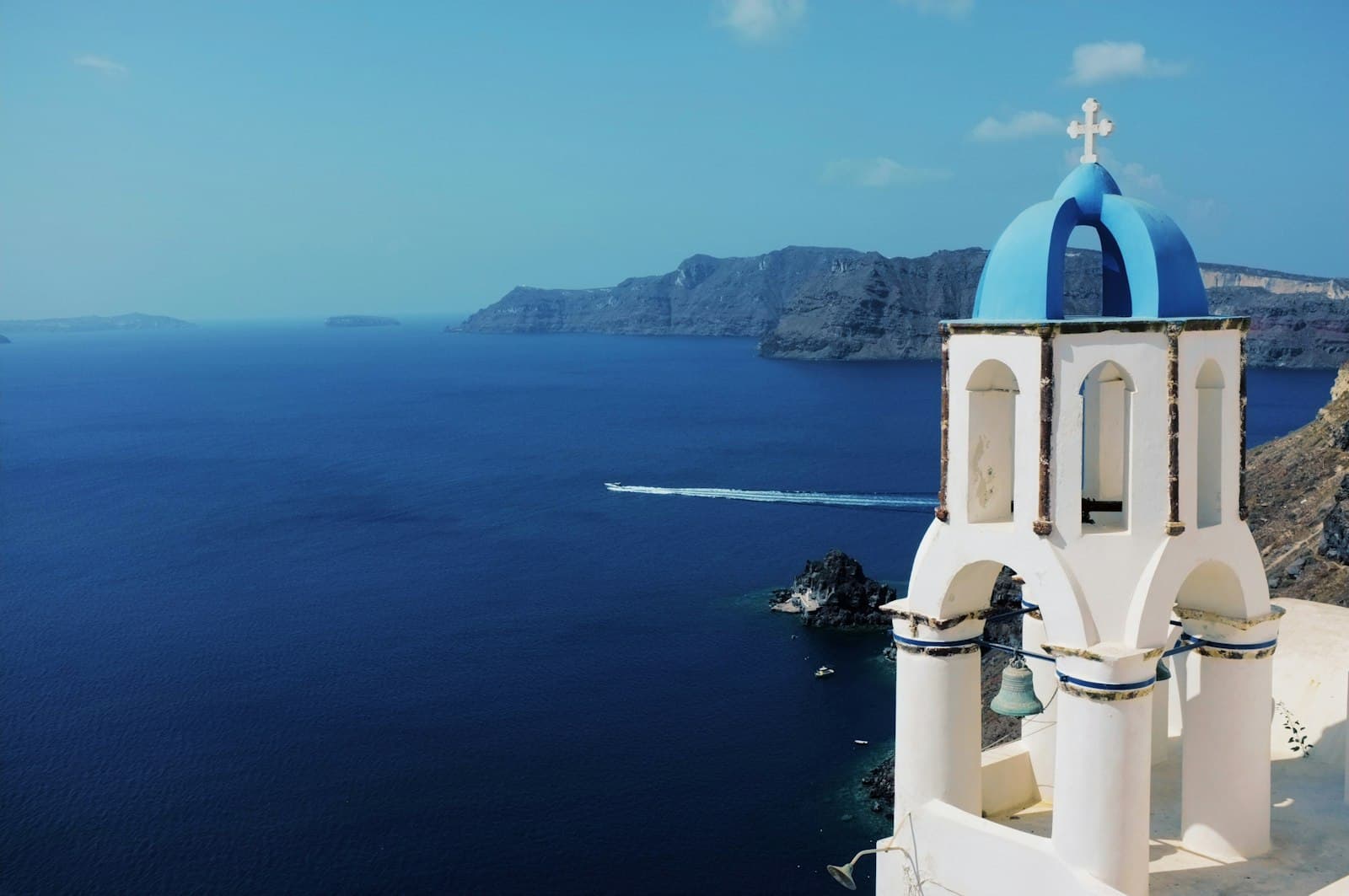
For a first sailing holiday in Greece, start in the Ionian islands: flat water, moderate afternoon thermals of force 2 to 4, hops of 10 to 20 miles and shelter everywhere. The Cyclades, swept by the Meltemi from July to mid-September — a steady force 5 to 7 for days at a time — are a different sport altogether: save them for a seasoned crew, or go in June or early October.
Two seas with opposite personalities
The Ionian (Corfu, Lefkada, Kefalonia, Ithaca, Zakynthos) rolls out tall green islands, sheltered channels, short distances and villages with pontoons where you moor in front of the taverna. The sea is rarely rough, and a bad day simply means a shorter hop. The Cyclades (Paros, Naxos, Sifnos, Ios, Amorgos and their sisters) are the exact opposite: a mineral, whitewashed archipelago planted in the open Aegean, with exposed passages between islands, more weather-sensitive anchorages and unforgettable light. The difference is not about beauty — both grounds are superb — but about sea state and the margin for error left to the crew.
The Meltemi is the referee
The Meltemi is a northerly wind with a thermal component that settles over the Aegean from mid-June to mid-September, peaking in July and August. In practice: force 5 to 7, sometimes 8 in the channels between islands, for three to six consecutive days, with a short, steep sea of 2 to 3 metres. It does not ease at night. A crew at home beating in a stiff breeze copes very well — many love it; a family crew loses its holiday to it. Across in the Ionian, life runs on the maïstro: a north-westerly breeze that builds to force 3-4 in the early afternoon and dies at sunset. You can quite literally schedule the siesta around it.
Distances: island-hopping versus coastal ambling
- Ionian: legs of 8 to 20 miles; the Lefkada, Meganisi, Ithaca, Kefalonia loop adds up to 80-100 miles over a week.
- Cyclades: passages of 25 to 40 miles between island groups, often hard on the wind or in a boisterous following breeze.
- Athens to Paros: about 95 miles, done as one very long day or an overnight sail.
In the Cyclades, a force-7 Meltemi day is spent in harbour or at anchor: build two buffer days into each week, or the cruise ends as a stressful delivery trip. One more consequence: never book a return flight for the morning after your last planned passage — that is the classic recipe for an all-night motor into a head sea.
Harbours, quays and mooring Greek-style
In both basins the standard berth is stern-to on the town quay, on your own anchor: no lazy lines, few finger pontoons, sometimes no harbour office at all, and modest fees — often under 20 € a night for a 12-metre boat outside private marinas. The windlass and 60 metres of chain are your best crew members; our glossary covers the manoeuvring vocabulary if you need it. The Ionian adds taverna pontoons, free if you dine. In the Cyclades, many quays are exposed to the Meltemi and swell finds its way in: a well-chosen anchorage is often more comfortable than the harbour itself.
Which season for which basin
In the Ionian the season stretches from May to October with a gentle summer; July and August are busy, flotillas included. In the Cyclades, June and September are the obvious answer: bearable heat, a better-mannered Meltemi, breathable anchorages. August combines the strongest wind with the densest crowds — the worst possible combination for a first visit. In April-May and October both basins empty out: cooler water, half-asleep tavernas, but an authentic Greece and charter rates that can drop by a third or more compared with the August peak.
Where to start
For a first charter, start from Lefkada: Preveza airport is twenty minutes from the base, and the southern Ionian loop forgives almost anything. For the Cyclades, the bases at Athens-Alimos, Lavrion or Paros are the natural picks — with a local skipper if you are sailing in peak Meltemi. Check the charter company's licence requirements early, before paying a deposit: a recognised certificate of competence plus a declared co-skipper is the norm across Greek bases. On the boat itself, a catamaran adds real comfort at anchor in the Ionian but demands vigilance in the Aegean breeze. To compare with a sheltered basin next door, read our guide to Croatia by boat; and to build a whole first season, see the perfect first-summer itinerary.
Frequently asked questions
When does the Meltemi blow in Greece?
The Meltemi settles over the Aegean from mid-June to mid-September, peaking in July and August. It blows from the north at force 5 to 7 — occasionally 8 in the island channels — in episodes of three to six days, without easing at night. Forecast models capture it well two to three days out, which lets you plan passages around it.
Do you need a licence to charter a yacht in Greece?
Yes. In practice Greek charter companies require a recognised certificate of competence for the skipper (an ICC or equivalent national licence) and have a second experienced crew member sign a declaration. Without a certificate, the answer is a skippered charter — common, and often the best choice for a first Cyclades trip anyway.
Cyclades or Ionian with children?
The Ionian, without hesitation: flat water, short hops that leave afternoons free, calm anchorages, tavernas reachable by dinghy. The Cyclades impose long passages and a short, tiring sea that wears out a young crew quickly. Save them for later, or aim for June with a very flexible plan.
The surest way to know a boat is to sail her.
Before you buy — or simply to get away this season. Tell us your dates and your cruising area, and we source the right boat through our network of owners and vetted fleets.