Croatia by boat: the endless archipelago
Kornati, Hvar, Mljet: a two-week Split-Dubrovnik itinerary, ACI marinas, reading the Bora wind and Croatia's navigation fees. Your Adriatic playbook.
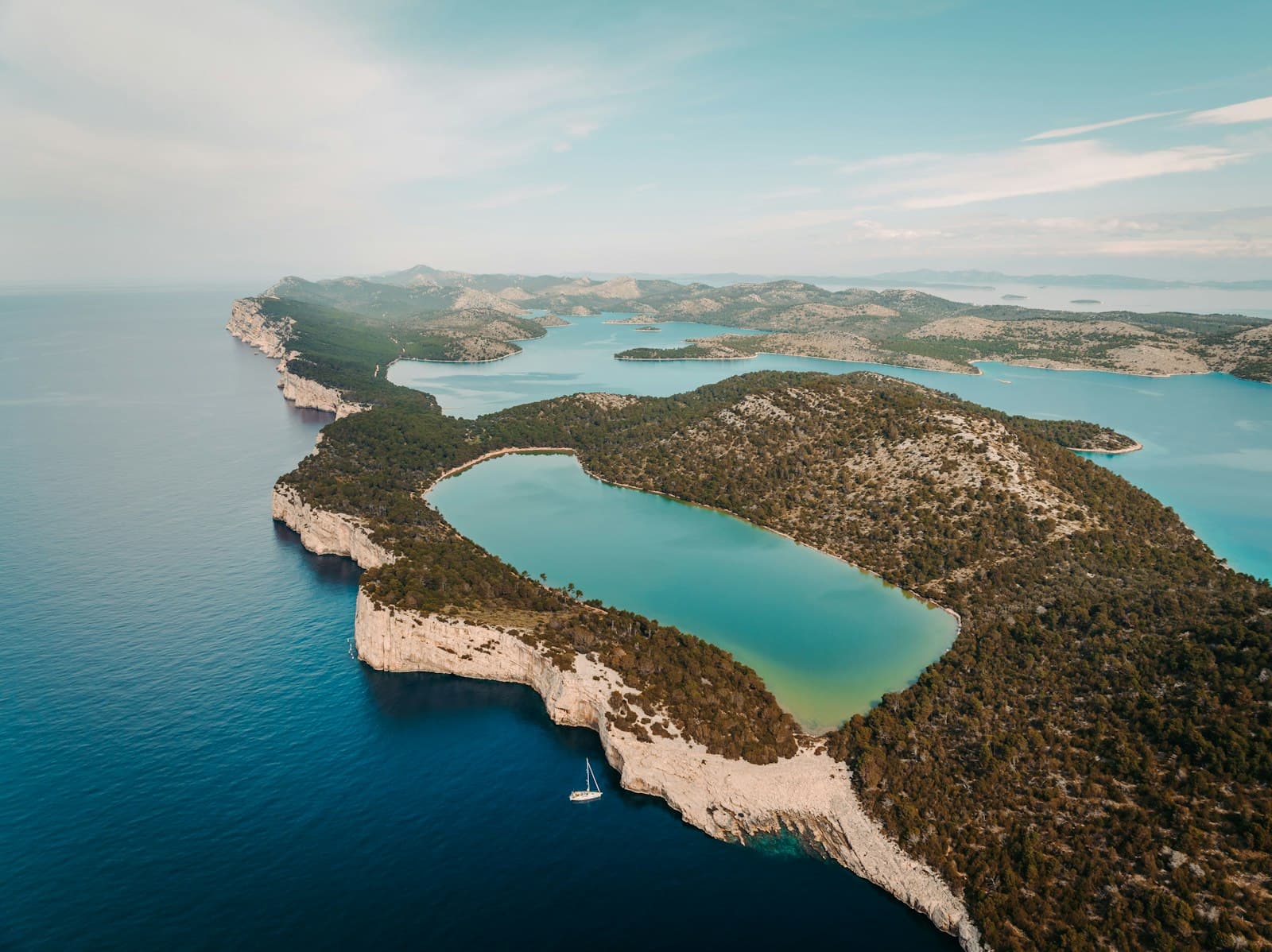
With more than a thousand islands and islets strung along 300 miles of sheltered coastline, Croatia is the densest cruising ground in the Mediterranean. The classic two-week itinerary links Split to Dubrovnik via Hvar, Vis, Korčula and Mljet — 130 to 160 miles of short hops. Four subjects to master before you go: ACI marinas, paid mooring buoys, navigation fees and the Bora wind.
An archipelago built for cruising
The Dalmatian islands run parallel to the coast, creating sheltered channels where the sea often stays flat: you cruise in 10-to-25-mile legs with shelter less than an hour away whatever the wind direction. To the north, the Kornati roll out 89 mineral islands inside a paying national park — a lunar landscape with no equivalent in Europe. Everywhere, konobas (family tavernas) reachable by dinghy, limpid water and Venetian villages. It is the ideal ground for a crew that wants to string anchorages together without ever standing out to sea, and one of the best cruising schools there is.
Bora, Jugo, Maestral: reading the Adriatic winds
The Bora is the wind that commands respect: a katabatic north-easterly that pours down the mountains and strikes in brutal gusts, especially in the channels below the Velebit range north of Zadar. Violent and frequent in winter, it remains possible in summer as 12-to-36-hour blows, sometimes announced with little warning: check the local bulletins every morning, no exceptions. The Jugo, from the south-east, blows warm and humid, builds a genuine sea and settles in for days. The Maestral, a north-westerly thermal breeze reaching force 3-4 in the afternoon, is the cruising wind of summer: you set your daily rhythm by it.
ACI marinas, buoys and anchorages
The ACI network — some twenty marinas spread along the whole coast — gives Croatian cruising its backbone: online booking, dependable services, firm high-season pricing in the region of 80 to 180 € a night for a 12-metre boat depending on the site. Between marinas the rotation is simple: bays equipped with paid buoys (30 to 60 € a night, sometimes deducted if you dine at the konoba), village quays, and still-plentiful free anchorages. In the national parks — Kornati, Mljet — and the reserves, the entry ticket is mandatory and noticeably cheaper bought online in advance. Budget realistically: a two-week cruise alternating marinas, buoys and free anchorages typically lands between 800 and 1,500 € in mooring and park costs for a 12-metre boat.
Fees, taxes and paperwork
A foreign-flagged boat owes a navigation fee, payable online, scaled to length; a per-person sojourn tax comes on top. On charter these charges are usually bundled or billed by the base, but check the crew list: it must be declared and kept up to date. The skipper must present a recognised certificate of competence and a VHF radio certificate — Croatian charter bases ask for both, systematically. Amounts and procedures change regularly: confirm the current rules with your base or the harbour office before boarding rather than trusting a dated forum thread.
Split-Dubrovnik: the ideal two weeks
The proven itinerary, one-way if your charter company allows it:
- days 1-2: Split, then Milna or Bobovišća on Brač, a 12-mile warm-up;
- days 3-4: Hvar and the Pakleni islands — anchorages, old town, nightlife;
- days 5-6: Vis and the blue cave of Biševo, the best-preserved island;
- days 7-9: Korčula via the island of Šćedro, a fortified Venetian town;
- days 10-11: Mljet and the salt lakes of the national park;
- days 12-13: Šipan and the Elaphiti islands;
- day 14: arrival in Dubrovnik.
That is 130 to 160 miles in legs of 12 to 25 miles, with buffer days built in naturally. If a Jugo episode eats a day, the route absorbs it: every stage has an alternative harbour within ten miles, which is precisely what makes this itinerary so forgiving for a first Adriatic season.
Where to start
Settle the one-way versus loop question first: the one-way Split-Dubrovnik run carries a repositioning fee but doubles what you see for the same miles. If you sail in August, book the pressure points (Hvar, Korčula) as soon as your dates are fixed — or aim for June and September, the real high season for enjoyment. Check the licences and VHF certificate your base requires. To compare with southern Europe's other great basin, read Greece: Cyclades or Ionian to start?; for family comfort in the coves, a catamaran remains unbeatable; and to put numbers on a full season, run our cost calculator.
Frequently asked questions
When is the best time to sail in Croatia?
June and September offer the best balance: warm water, breathable anchorages, softer prices and a regular Maestral breeze. July and August concentrate the crowds and peak pricing, especially around Hvar. May and October are perfectly sailable and very quiet, but the water is cool and some konobas close.
Is the Bora dangerous in summer?
It can be: summer Bora blows are rarer and shorter than winter ones, but the gusts remain brutal and the warning is sometimes under twelve hours. The defence is simple: local forecast every morning, extra caution in the channels below the Velebit range, and a shelter identified to the north-east before every leg.
How much does a week's sailing in Croatia cost?
On charter, a 12-to-14-metre sailing yacht runs roughly 2,500 to 6,000 € a week depending on season and the boat's age. Add 500 to 1,000 € of on-the-water costs: marinas or buoys, park entries, fuel, taxes. A recent catamaran in August can double the charter bill.
The surest way to know a boat is to sail her.
Before you buy — or simply to get away this season. Tell us your dates and your cruising area, and we source the right boat through our network of owners and vetted fleets.