The Caribbean season done right
Trade winds from December to May, hurricane season from June to November, charter bases and budgets: how to plan a successful Caribbean sailing season.
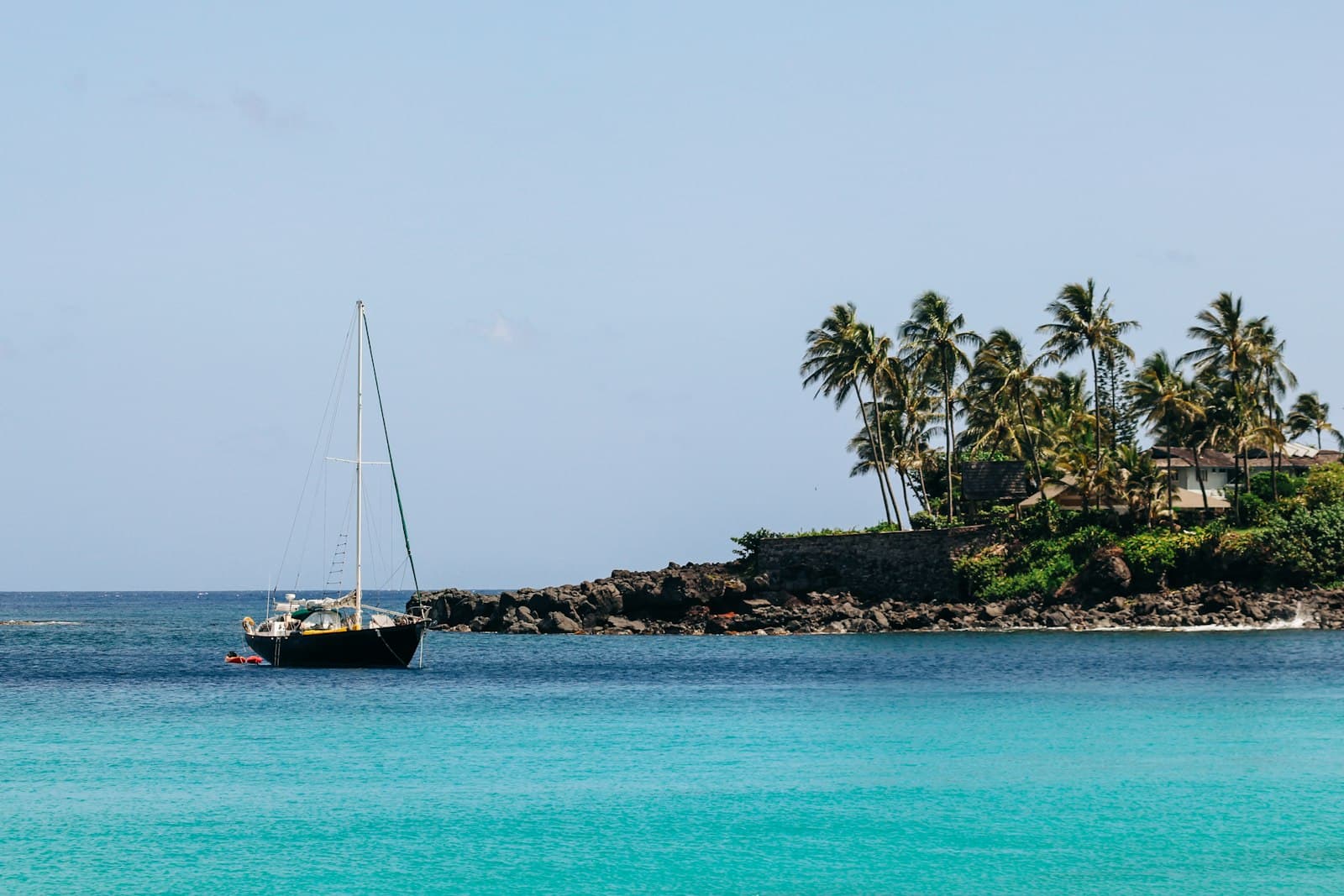
Planning a Caribbean sailing season comes down to one simple rule: the season runs from December to May, driven by easterly trade winds of 15 to 25 knots, and it ends before the official hurricane season, June through November. The island arc lines up some thirty islands between Grenada and the Virgin Islands, spaced 20 to 40 miles apart: you can change country, language and anchorage in half a day at sea, almost always on a reach or a run.
The island arc: 500 miles of stepping stones
From Grenada to the Virgin Islands, the arc stretches roughly 500 miles on a north-south axis, square across the easterly trades. In practice you work up or down the chain on a beam reach — the fastest, most comfortable point of sail there is. Each zone has its own character: the Grenadines for postcard anchorages (Tobago Cays, Bequia), Dominica and Guadeloupe for raw nature, Martinique for French-standard logistics, Antigua and St Barths for the polished end, the British Virgin Islands for a sheltered playground that suits families perfectly. Tides are small (a foot or two) and most navigation is line-of-sight, but charts remain essential: the region has its share of poorly marked cays and reefs.
Trade winds, squalls and the channel effect
The trades blow from the east at 15 to 25 knots, reinforced in December and January by the Christmas winds, which readily reach 25-30 knots. Between the islands, the channel effect adds 5 to 10 knots and kicks up a short cross sea: inter-island passages, 3 to 5 hours on average, are best planned for early morning. In the lee of the high islands — Dominica, Martinique, Guadeloupe — expect total wind shadows followed by brutal gusts as you clear the coast. Squalls pass quickly but can double the wind for ten minutes: you reef before, not during. Nothing extreme, but a genuine sustained-wind cruising ground, noticeably more physical than a Mediterranean summer.
Hurricane season: the rule you don't negotiate
From June to November, peaking August through October, the arc sits inside the hurricane belt. Most insurance policies then require you to be out of the zone: south to Grenada and especially Trinidad, north to the United States, or hauled out and strapped down in an approved yard. Read your policy carefully — latitude limits, dates and yard requirements vary between insurers, and a breach can void your cover entirely. Many owners build their whole season around this: arrive in December after the crossing, work up the arc until April, drop back down to Grenada in May. Get this confirmed in writing with your insurer rather than relying on forum wisdom.
Charter bases: starting without owning
You don't need to own a boat to sample the region. Le Marin in Martinique is the largest charter base in the Caribbean: dozens of catamarans and monohulls leave every Saturday for the Grenadines or Dominica. Pointe-à-Pitre serves Les Saintes and Antigua, Tortola opens up the Virgin Islands, Grenada attacks the Grenadines from the south. In high season, expect anything from 3,000 euros a week for a 40-foot monohull to 8,000-12,000 euros for a recent 45-foot catamaran, skipper optional. Direct flights from Europe and North America into Martinique, Antigua and Tortola keep the logistics simple.
The budget for an owner's season
A Caribbean season costs less than you might think on the harbour side: anchoring is usually free, regulated mooring buoys run around 20 to 40 dollars a night, and marinas charge 40 to 80 euros for a 45-footer. Against that, imported provisions cost 30 to 50 percent more than back home — local markets offset part of it — and the tropical climate accelerates everything: UV on sails and canvas, anodes, antifouling, dinghy outboards. A couple lives well aboard on 1,500 to 3,000 euros a month excluding major maintenance. To pressure-test the full-year numbers, run your assumptions through the cost of ownership calculator.
Where to start
- Charter for a week in Martinique or the Grenadines, with a skipper if needed, to confirm the programme actually suits you.
- If you're bringing your own boat, prepare the Atlantic crossing for an arrival between December and January.
- Check your insurance now: hurricane zone wording, latitude clauses, yard requirements.
- Build the season with the wind: arrive mid-arc, explore island by island, drop south to Grenada by May.
- Keep slack in the plan: one island per week is a good pace — the Caribbean rewards slow cruising.
Frequently asked questions
When is the best time to sail the Caribbean?
December to May, during the dry season: steady 15 to 25 knot trade winds, stable temperatures and virtually no hurricane risk. January and February are the windiest months, April and May the gentlest. June through November, the heart of hurricane season, is to be avoided.
Do I need a licence to charter a yacht in the Caribbean?
In the French islands no licence is required for a sailing yacht, but charter companies ask for a sailing résumé proving skipper-level experience. Requirements vary by flag and territory, so check with the operator. Without enough experience, chartering with a professional skipper is available everywhere, including the British Virgin Islands.
Where should I leave my boat during hurricane season?
The two classic options are Grenada and, above all, Trinidad, south of the usual hurricane tracks, either afloat or hauled out and strapped down in a yard. Some owners head north to the United States instead. Check your insurance policy: many specify a zone, dates and sometimes an approved yard.
The surest way to know a boat is to sail her.
Before you buy — or simply to get away this season. Tell us your dates and your cruising area, and we source the right boat through our network of owners and vetted fleets.