Charter, buy or shared ownership: which formula to start?
Charter, boat club, shared ownership, lease or purchase: the right formula depends on your weeks afloat per year. A clear matrix to decide fast.
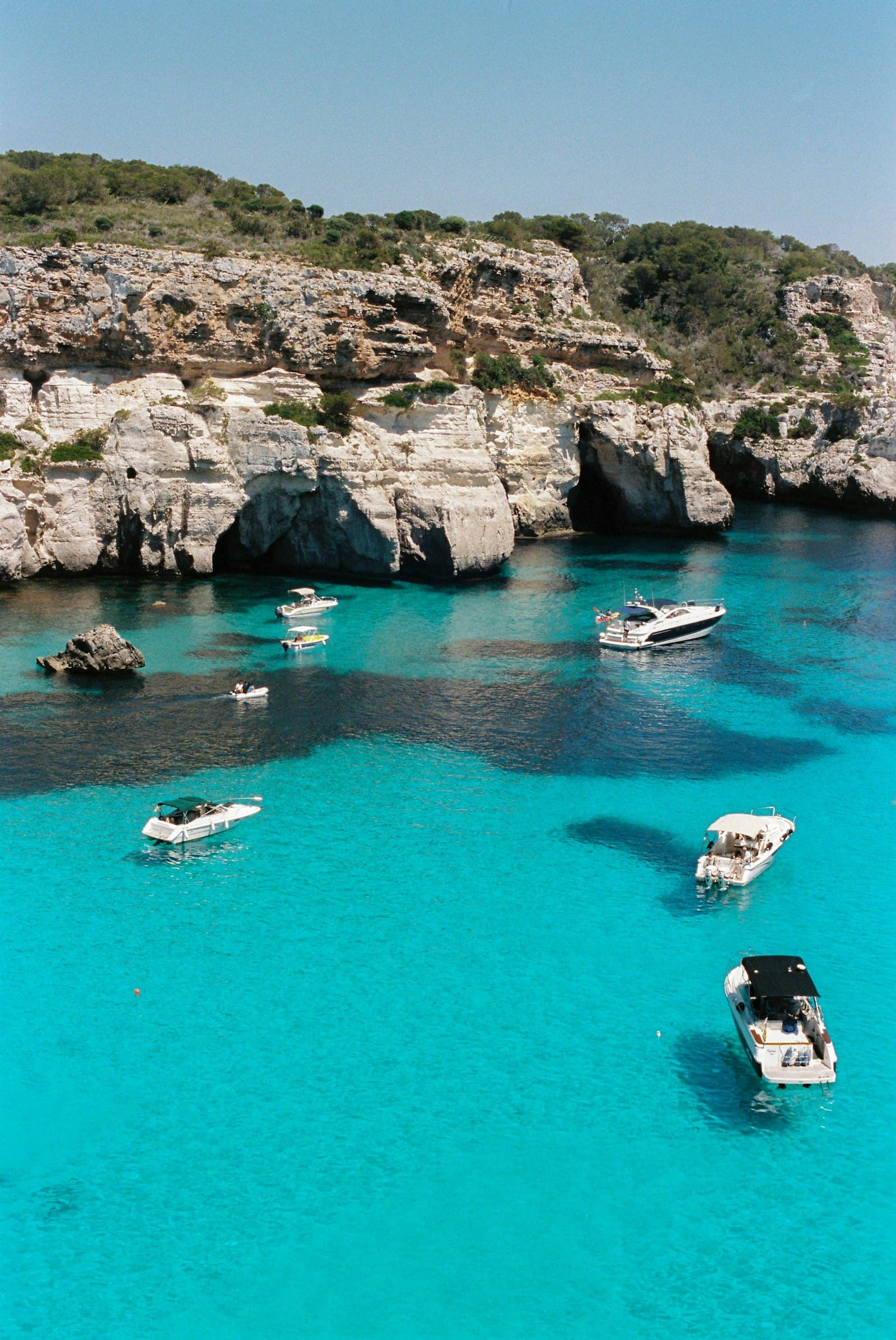
If you spend fewer than three to four weeks a year on the water, chartering is almost always more rational than buying. Between four and eight weeks, shared ownership and boat clubs become serious options. Beyond that — or if the boat is a life project rather than a hobby — buying, whether outright, on credit or through a lease-purchase scheme, is fully justified. The right formula depends neither on your means nor on your desire, but on one variable everyone forgets: your real time afloat.
The question that settles it: how many weeks a year, honestly?
The classic mistake is reasoning in dreams — "I'll go out every weekend" — rather than in reality. Between weather, work, family and life's surprises, most European owners use their boat two to four weeks a year. Yet a cruising boat costs 5 to 10% of its value as new in fixed annual costs, whether it sails or not — the line-by-line detail is in what boating really costs. Divide that annual budget by your realistic days at sea: that cost per day afloat is the only number that lets you compare all the formulas honestly.
Chartering: pay for usage, nothing but usage
Expect 2,000 to 5,000 euros a week for a three-cabin sailboat in the Mediterranean depending on season, more for a recent catamaran. It looks expensive at first glance — and yet: zero fixed costs, zero maintenance, zero berth, a recent and serviced boat, and the freedom to change cruising ground and model every year. Corsica this summer, Greece next year, the Caribbean in winter: no owner enjoys that flexibility.
For a future buyer, chartering is also the best sea trial there is: renting a monohull one season and a catamaran the next will teach you more than every boat show combined. And with a professional on board it becomes an accelerated school — see skippered charter.
Boat clubs and shared ownership: pooling without owning alone
Boat clubs run on subscription — in the region of 150 to 400 euros a month — and give access to a shared fleet of dayboats, booked through an app. Ideal for regular coastal outings with none of an owner's obligations; frustrating as soon as you want to sleep aboard or leave for more than a day.
Shared ownership divides a real boat: a share (often a quarter or an eighth), an annual usage calendar, costs split accordingly. Organised programmes handle maintenance, scheduling and sometimes resale. The points to watch are contractual rather than nautical: exit and share-resale conditions, arbitration of calendar conflicts, a shared standard of upkeep. A well-drafted syndicate between compatible people works remarkably well; an improvised one between friends too often ends with lawyers.
Buying and lease-purchase: owning, with or without the bank
Buying outright remains the simplest: you own, you decide, you carry everything. Classic marine finance works like a car loan over longer terms. Lease-purchase schemes — where you pay monthly instalments then exercise a final purchase option — are widespread in several European markets, notably for new boats. They smooth cash flow and have historically carried tax advantages, but those rules change regularly and vary by country: have the structure validated by a professional under your jurisdiction before signing, and read precisely who insures and who maintains during the lease period.
In every case, ownership only makes economic sense if the boat becomes a place you live: improvised weekends, tinkering you actually enjoy, the same anchorage found again every summer. That cannot be calculated — but it can be tested.
The ten-minute decision matrix
- Fewer than two weeks a year: charter, no hesitation — keep your capital.
- Two to four weeks, appetite for variety: charter, possibly topped up with a year-round boat club.
- Four to eight weeks in one fixed area: shared ownership, or buying with a charter-management programme.
- More than eight weeks, a life project, a taste for maintenance: buy.
- The budget is there but the time is not: charter one more year — a boat asleep in the marina costs as much as a boat that sails.
Where to start: test before you sign
Start by chartering exactly the boat you think you want to buy: same size, same family, same cruising ground. A season of two or three varied charters costs less than a single year of owning a 33-footer — and infinitely less than a buying mistake. Then run your assumptions through the cost of ownership calculator to put numbers on the comparison. And if buying is confirmed, structure the process: our yacht buying service helps define the programme, shortlist models and secure the transaction.
Frequently asked questions
Is it better to charter or to buy a boat?
It depends on your real usage: below three to four weeks afloat per year, chartering almost always works out cheaper than ownership once fixed costs are counted. Buying makes sense when the boat becomes a place you live, used more than six to eight weeks a year, or when the project goes beyond a hobby. Compute the cost per day at sea under each formula to decide objectively.
How does boat shared ownership work?
You buy a share of the boat — often a quarter or an eighth — which entitles you to weeks of use spread across an annual calendar, with costs split between co-owners. Organised programmes handle maintenance, scheduling and sometimes share resale. The critical point is the contract: exit conditions, conflict arbitration and the standard of upkeep must be written down in black and white.
What is a boat lease-purchase scheme?
A lease-purchase (LOA in France) is a financing structure where you lease the boat from a finance house for several years through monthly instalments, then exercise a final purchase option to become the owner. It smooths cash flow and has carried VAT advantages, but the tax rules change regularly and vary by country. Always have the structure validated by a professional before signing.
The surest way to know a boat is to sail her.
Before you buy — or simply to get away this season. Tell us your dates and your cruising area, and we source the right boat through our network of owners and vetted fleets.