GRP, aluminium, steel, carbon: hull materials compared
GRP, aluminium, steel or carbon: strengths, weaknesses, upkeep and lifespan of each hull material — and how to check a hull's condition before buying.
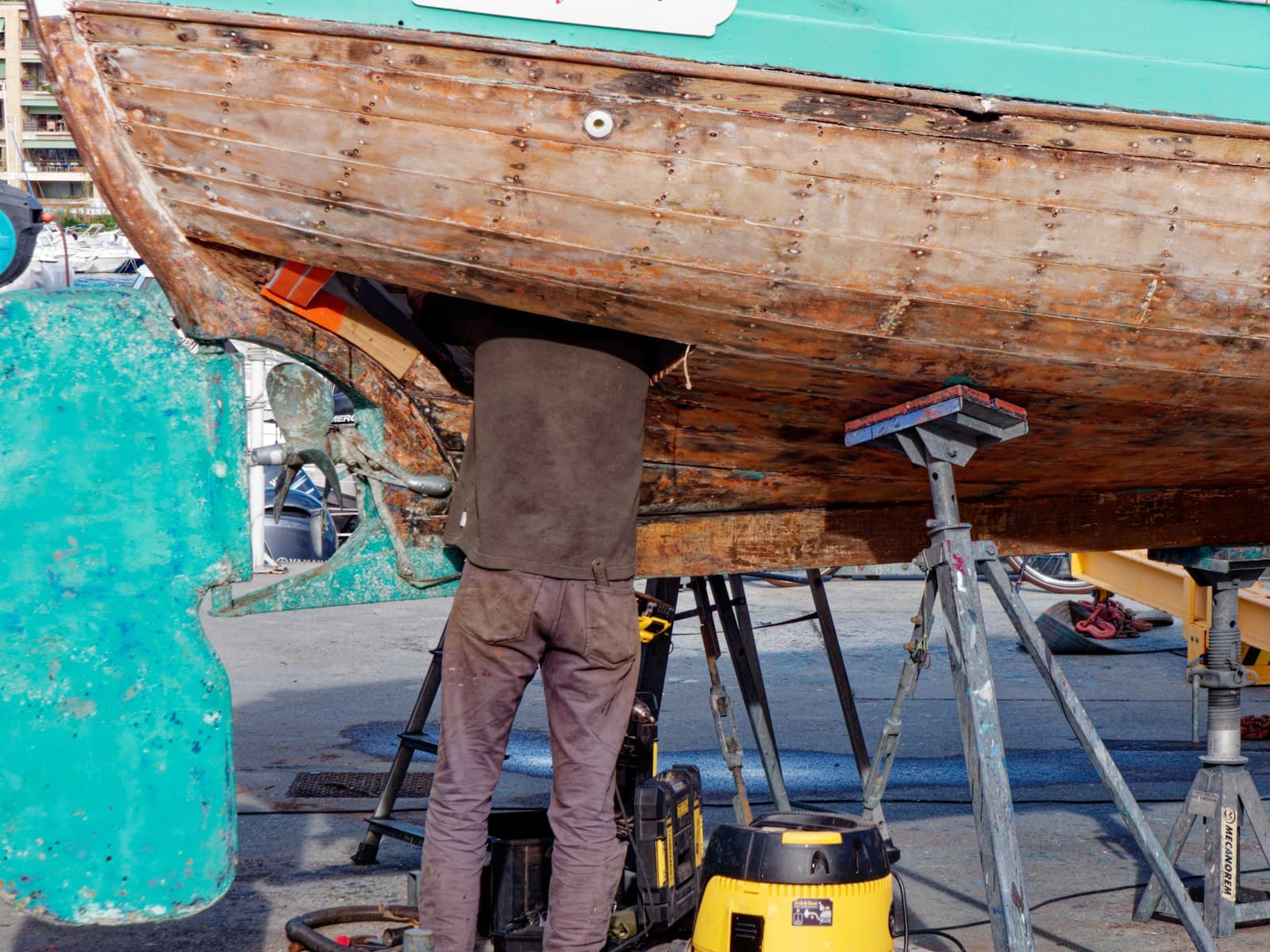
More than 90% of pleasure boats built today are GRP, a laminate of glass fibre and resin also known as fibreglass. Aluminium dominates long-distance cruising, steel the heavy-duty big boats and inland waterways, carbon the racing and high-performance end. No material is best in absolute terms: each imposes its own triangle of price, upkeep and lifespan.
GRP: the standard that democratised boating
Glass-resin laminate made series production possible from the 1960s onwards, and it remains unbeatable on value for money. Two constructions coexist: solid laminate, heavy and reassuring, and sandwich (a foam or balsa core between two skins), lighter and better insulated but vulnerable to water ingress if the core is poorly protected. The strengths: contained cost, complex shapes, maintenance limited to washing and polishing, and repairs that any yard can handle. The weaknesses: osmosis on older or poorly built boats, fatigue on very lightweight structures, and gelcoat that chalks under UV without care. Properly maintained, a GRP boat sails happily for 40 to 50 years — the second-hand market proves it daily. Decks deserve the same attention as hulls: balsa-cored decks around poorly bedded fittings are the classic entry point for moisture, and the repair usually costs far more than the fitting that caused it.
Aluminium: the long-distance material
Marine aluminium combines light weight with exceptional impact resistance: under a hit, the hull dents rather than cracks. It is the favourite material of expedition sailboats and centreboarders that can dry out on a beach or flirt with ice, a speciality several European yards have turned into an art form. A bare, unpainted hull needs minimal upkeep. The catch: galvanic corrosion. A stray current, a neglected anode or an incompatible metal in direct contact can eat through a hull in months. The electrical installation must be flawless and monitored, and antifouling must be copper-free, since copper-based paints attack aluminium. Budget 20 to 40% more than an equivalent GRP boat at build, and specialised welders for repairs.
Steel: toughness, at the price of rust
Steel is close to indestructible in a collision: a half-submerged container, a poorly charted reef, an aggressive quay — the hull takes it. It can be welded in any port in the world, a real argument for remote-route voyaging. Its flaws are well known: weight, which hurts sailing performance, and above all corrosion, which attacks as much from the inside (damp bilges, hidden areas behind linings) as from the outside. Paintwork is a permanent project, and an ultrasonic thickness survey is essential before buying. Modern epoxy coating systems have improved matters considerably, but they only postpone the discipline; they never abolish it. Steel remains relevant for big voyaging boats, barges and the inland-waterways heritage fleet.
Carbon and high-performance composites
Carbon-epoxy delivers stiffness and lightness without equal: it is the material of race boats, high-end masts and a few exceptional fast cruisers. Its behaviour differs from glass: stiffer, it snaps where GRP deforms, and a localised impact can cause damage invisible at the surface. Repairs demand rare skills and serious money. For most owners, carbon makes sense first on a mast or bowsprit, rarely on a whole hull.
Modern wood: the exception you have to earn
Wood has not disappeared: plywood-epoxy and cold-moulded construction produce light, healthy, warm boats, and the charm of classic yachts is intact. But upkeep is demanding, some insurers are cautious, and resale means finding the buyer who understands what they are buying. A beautiful world, best explored among trawlers and classics, provided you enjoy the smell of varnish.
Checking a hull before you buy
Whatever the material, inspection follows one simple logic: look for water where it does not belong, and for metal where it is sacrificing itself.
- GRP: moisture-meter readings after a few days ashore, a hunt for osmosis blisters and rough repairs; our guide to osmosis and corrosion covers the warning signs.
- Aluminium: anode condition, electrical wiring, contact points with other metals (valves, engine mounts), pitting under paint.
- Steel: ultrasonic thickness readings on the bottom plates, internal inspection behind linings and in the bilges.
- All materials: tapping with a mallet around the keel, rudder and through-hulls, plus a documented maintenance history.
These checks never replace a professional eye: a pre-purchase survey costs a few hundred euros and sometimes saves tens of thousands. Along with the sea trial, it is the single best investment of your whole buying project. Bring the boat's file with you: a documented history of anode changes, paint jobs and yard visits tells you as much about a hull as the hull itself.
Frequently asked questions
What is the best material for a boat hull?
There is no best material in absolute terms, only a best choice per programme. GRP wins on value and ease of upkeep for coastal and classic cruising. Aluminium leads for long-distance voyaging and remote areas, steel for very large boats and inland waterways, carbon for pure performance.
How long does a fibreglass hull last?
A well-built, well-maintained GRP hull routinely exceeds 40 to 50 years of service. The watch points are osmosis, fatigued structural areas and gelcoat condition. Plenty of sailboats from the 1970s and 1980s are still cruising hard, proof that the material ages remarkably well when looked after.
Why choose an aluminium hull?
For its impact resistance and light weight: the hull dents instead of cracking, a decisive advantage far from help. Aluminium centreboarders can dry out deliberately and explore shallow areas. In return, expect a higher purchase budget and constant vigilance on the electrical installation and anodes.
Reading is the easy part. Then you have to decide.
A boat purchase turns on what you cannot see: the real history, the state of the hull below the waterline, how much room there is to negotiate. We represent you — independent of any seller, paid by you alone.