Monohull or catamaran: the real match-up
Feel, volume, berthing, budget, resale: the real monohull versus catamaran match-up, criterion by criterion, to choose the right boat for your plans.
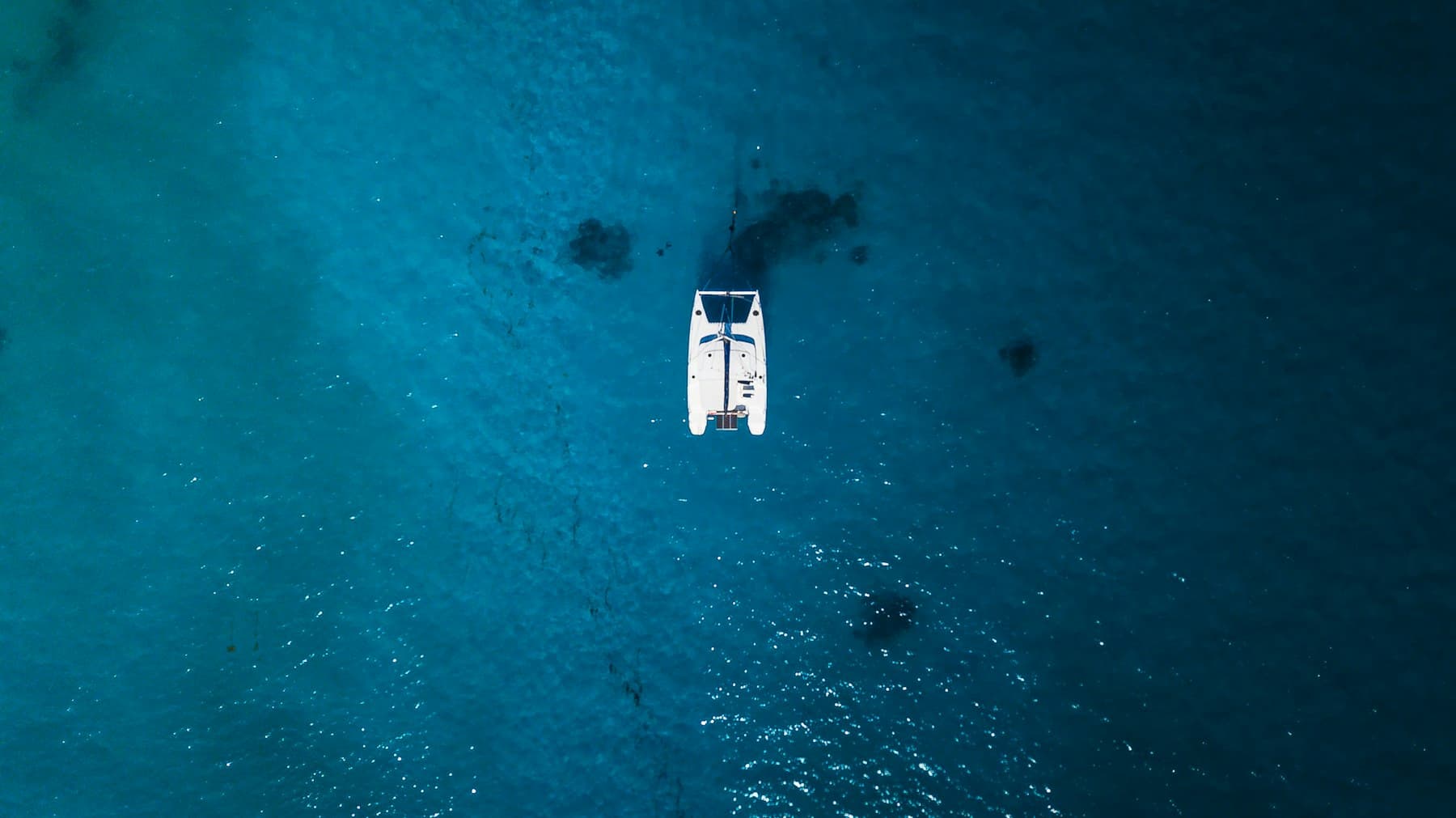
Neither the monohull nor the catamaran is better in the absolute. The monohull offers helm feel, contained berthing costs and the deepest resale market; the catamaran offers space, flat sailing and shallow draft, at the price of a higher entry ticket and berths charged at 1.5 to 2 times the monohull rate. The right choice depends on your programme: what you expect from the sea, the anchorage and the budget.
Feel: heeling versus the platform
A monohull is alive: it heels, accelerates in the gusts, transmits the sea through the helm. For many sailors that is the very pleasure of sailing — and for some crew members, a source of discomfort or apprehension. A catamaran sails flat: less fatigue, less broken crockery, life aboard carrying on almost normally under way. In exchange, the helm is more neutral, and hard on the wind in a seaway the jerky motion between two hulls surprises newcomers. Seasickness, for its part, strikes differently from one person to the next: some stomachs prefer a steady heel, others the stable platform. Neither motion is objectively better: you need to have experienced both before deciding.
Volume and life aboard: two different worlds
At equal length, a catamaran offers the volume of a much bigger monohull: a panoramic saloon on the same level as the cockpit, cabins spread across each hull — precious privacy between families or friends — and a generous foredeck. A 40-foot catamaran sleeps two families comfortably; a 40-foot monohull remains the territory of a crew that knows each other well. That is why charter fleets have swung massively towards catamarans. To dig into the multihull-specific criteria, see our guide to choosing your first catamaran.
Marina, anchorage, budget: the heart of the match
The catamaran's beam is paid for in marinas: expect 1.5 to 2 times the fee of a monohull of the same length, where a berth exists at all — many saturated harbours simply refuse annual multihull contracts. At anchor the balance flips: with 1.2 to 1.5 metres of draft and roll-free stability, the cat rules the coves. On purchase, as an order of magnitude, a new 40-foot cruising catamaran costs 1.5 to 2 times an equivalent monohull, and upkeep follows the same slope: two engines, two rudders, more surface everywhere. Twin engines do bring redundancy and effortless marina handling — but also two of every service bill, every season. Put your own figures into the cost of ownership calculator before deciding.
Performance and safety: retiring the clichés
Off the wind in a medium breeze, a cruising catamaran is fast and comfortable; hard on the wind, a good monohull generally points higher. On safety, the two philosophies differ: ballasted, the monohull rights itself after a knockdown but can sink; unsinkable, the catamaran practically cannot sink but will not right itself after a capsize — an extremely rare event in cruising. The practical consequence: on a cat you must reef early, because the absence of heel does not warn you the way a monohull does. Draft tells another story: where a monohull's keel demands two metres of water, a cruising cat anchors in a metre and a half, closer to the beach and often alone in the spot. Sensibly handled, coastal or offshore, both platforms are safe — differently.
Resale: two markets that do not resemble each other
The monohull enjoys Europe's deepest second-hand market, especially under 15 metres: more buyers, faster transactions in the common sizes. The catamaran rides sustained worldwide demand, boosted by the charter industry, with sometimes gentler depreciation on standardised models — but a smaller fleet and more geographically scattered buyers. Selling windows differ too: catamarans move fastest in spring, when charter operators renew their fleets, while monohulls follow the general season. In both cases, condition, maintenance history and equipment ultimately matter more than the formula. The comparison tool lets you put candidate models side by side, figures included.
Where to start
- Charter each formula for a week — same area, same season: nothing replaces the test in real conditions.
- Rank your priorities: feel, volume, berthing budget, life at anchor, resale — you cannot have all five.
- Confirm a multihull berth is actually available before buying any catamaran.
- Check everything against your cruising programme: the programme decides, not the forum.
The monohull-catamaran match has no universal winner; it has a winner per programme. Those who dream of steering rarely choose the cat; families who live at anchor rarely regret having chosen it.
Frequently asked questions
Is a catamaran safer than a monohull?
They are safe in different ways. A ballasted monohull rights itself after a knockdown but can sink; a catamaran is practically unsinkable but will not right itself after a capsize — an extremely rare event in cruising. Real safety comes from preparation, weather discipline and early reefing, whatever the platform.
Why does a catamaran berth cost more?
Because of the beam: a catamaran occupies the equivalent of two monohull berths. Most marinas charge 1.5 to 2 times the standard rate, and some refuse annual multihull contracts for lack of space. Berthing is the catamaran’s main hidden cost — check it before buying.
Does a catamaran resell better than a monohull?
Cruising catamarans enjoy sustained worldwide demand driven by the charter industry, with sometimes gentler depreciation on standardised models. But the monohull market remains the deepest in Europe, with more buyers in the common sizes. Condition, equipment and history ultimately matter more than the formula.
Reading is the easy part. Then you have to decide.
A boat purchase turns on what you cannot see: the real history, the state of the hull below the waterline, how much room there is to negotiate. We represent you — independent of any seller, paid by you alone.