What boat size? Why 40 feet is a threshold
Handling, berths, crew and running costs: why 40 feet (12 m) is a real threshold, and how to find the boat size that truly fits your programme.
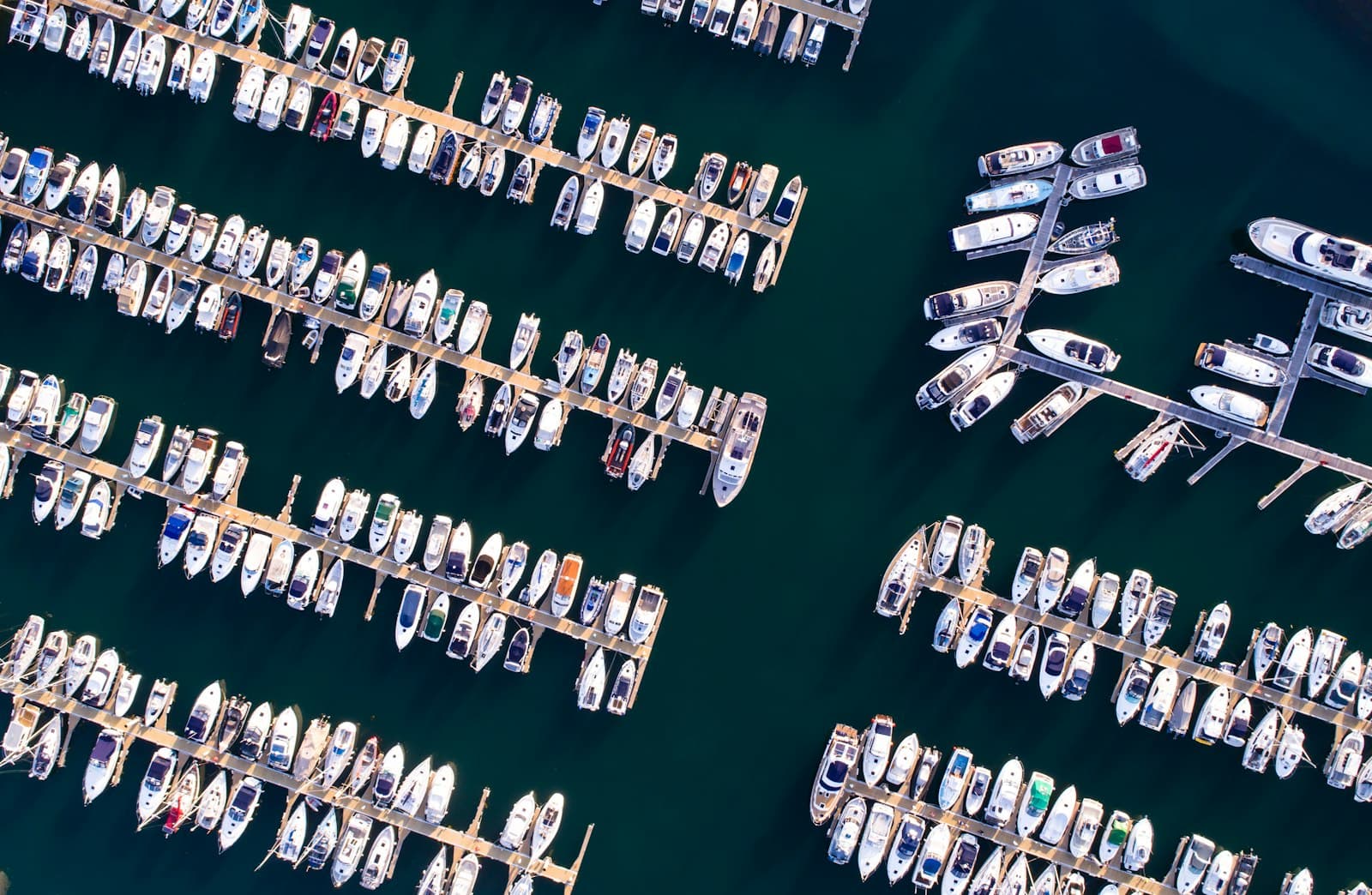
For a first cruising boat you can sleep on, the right size usually sits between 30 and 40 feet (9 to 12 metres): enough volume to be comfortable, loads still manageable by a couple, and a reasonable chance of finding a berth. Beyond 40 feet everything changes scale — loads, costs, berth scarcity, crew required — and that is exactly why 40 feet (12 metres) is a threshold.
What length really changes
Length is misleading because it grows linearly while everything else grows faster. Two extra metres mean roughly 30 to 40% more volume, noticeably heavier sails, an anchor chain that gains tens of kilos, and more windage in marina manoeuvres. Loads follow the same slope: a 45-footer's mooring line snatching in a gust can no longer be held by hand, and a 50-footer's genoa is no longer handled without an electric winch. Purchase price, insurance, antifouling, haul-outs, rigging: nearly every cost line tracks area or weight, not length. Insurance premiums follow value, marina fees follow length bands, and yard bills follow surface: the budget curve steepens quietly but steadily. Comparing two boats by length alone is like comparing two houses by the width of their façade.
Handling: the couple is the sizing limit
Up to about 12 metres, a reasonably practised couple does everything: berthing in a crosswind, anchoring cleanly, hoisting and reefing. An electric windlass and a bow thruster help without being essential. Beyond that, freeboard rises and surfaces get heavy, and you need either equipment — electric winches, furlers everywhere, a hydraulic passerelle, all systems that cost money and eventually break — or extra hands on every outing. A 40-footer can be single-handed with method; a 50-footer single-handed is expert territory. And a boat you hesitate to manoeuvre goes out less: it is mechanical, and you can read it in the engine hours of the second-hand market.
Berths: scarcity starts at 12 metres
Most European marinas were designed when the average boat measured under 12 metres: big berths are structurally scarce. In the western Mediterranean, waiting lists lengthen from 10 metres and become discouraging beyond 12. Prices are not linear either: as annual orders of magnitude, expect 2,000 to 4,000 € for 8 metres, 5,000 to 10,000 € for 12 metres, and often more than 12,000 € for 15 metres — where a berth exists at all. Dry stacking and swinging moorings are credible alternatives below 10 metres, but they rarely exist for bigger boats. The golden rule: secure the berth before buying the boat, in writing. Our guide on finding, paying for and negotiating a berth covers the tactics, waiting lists included.
Costs by size band
As all-in annual budgets (berth, insurance, routine maintenance, wintering), the orders of magnitude observed on the market:
- Under 9 metres: 2,000 to 6,000 € a year — still light boating, sometimes trailerable.
- 9 to 12 metres: 6,000 to 15,000 € a year — the heart of the cruising market.
- 12 to 15 metres: 15,000 to 35,000 € a year — maintenance increasingly delegated.
- Over 15 metres: skipper or professional management territory.
The empirical rule of 10% of the boat's value per year remains a sound guardrail. Note the asymmetry: the jump from 12 to 15 metres costs proportionally more than the jump from 9 to 12, because you add systems (watermaker, generator, stabilisation) and paid labour. Run your own case through the cost of ownership calculator.
Too big too soon: the most expensive mistake
The classic first-purchase mistake is not picking the wrong brand: it is aiming one or two sizes above the real need. An intimidating boat goes out less, deteriorates faster from lack of use, and resells into a narrower market. Brokers see it every season: the 46-footer bought on a dream, sailed one summer, and back on the market with three hundred engine hours. Conversely, the 9-12 metre band is Europe's most liquid second-hand segment: buying one size below the dream, learning for two or three seasons, then trading up often proves the cheapest trajectory overall — depreciation included.
Where to start: size follows the programme
- Write your cruising programme first: waters, real crew, days per year.
- Charter the target size for a week: the marina manoeuvre will decide better than the boat-show pontoon.
- Confirm berth and wintering availability for that size, in writing, before signing anything.
- Budget a typical year; if the total exceeds what you can accept serenely, drop one size band.
A boat you master and use a lot will always make you happier than an impressive one asleep at the pontoon.
Frequently asked questions
What boat size is right for a beginner?
For day trips, 6 to 8 metres is plenty. For a first cruiser with accommodation, the 30-40 foot band (9-12 metres) offers the best balance between comfort, couple-friendly handling and controlled costs. Better to master a slightly small boat than to endure one that is too big.
Can a couple handle a 40-foot boat?
Yes — it is in fact the classic upper limit for a two-person programme. With an electric windlass, a bow thruster and good method, a 40-footer berths and anchors stress-free with two aboard, and single-handed with experience. Beyond that size, heavy equipment or extra crew become necessary.
Why are berths so expensive beyond 12 metres?
Because most marinas were designed around smaller boats: large berths are scarce, in high demand and priced accordingly. In the Mediterranean, waiting lists beyond 12 metres are often measured in years. Hence the rule: secure the berth before buying the boat.
Reading is the easy part. Then you have to decide.
A boat purchase turns on what you cannot see: the real history, the state of the hull below the waterline, how much room there is to negotiate. We represent you — independent of any seller, paid by you alone.