Norway and the North Sea: cruising the grandiose
Fjords, midnight sun and serious weather: a Bergen-Lofoten itinerary, cold-weather kit and realistic budgets for cruising Norway and the North Sea.
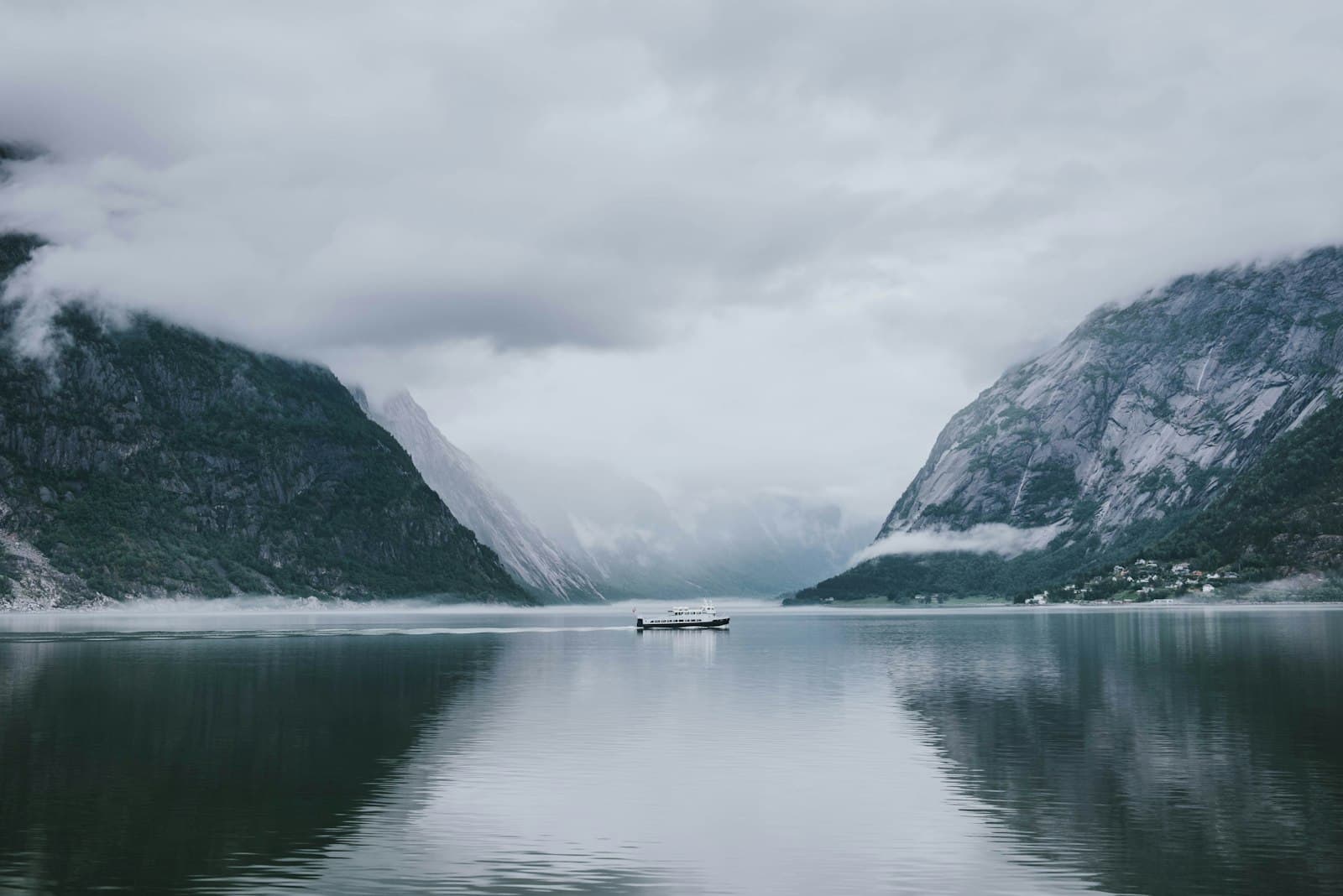
Cruising Norway means access to one of the finest playgrounds on earth: over 100,000 kilometres of coastline counting fjords and islands, a sheltered inner channel running for hundreds of miles, and the midnight sun north of the Arctic Circle from late May to late July. The trade-off is clear: North Sea weather that dictates its own windows, a boat equipped for the cold, and a crew willing to work with the elements rather than impose a schedule on them.
What changes compared with southern seas
Norway inverts the Mediterranean sailor's habits. The inner lead — indre led — lets you run the coast in the shelter of an almost continuous chain of islands, often on flat water while the North Sea churns offshore. Buoyage is excellent, charts are accurate, and villages have visitor pontoons. On the other hand, everything is deep: anchorages are in 10 to 20 metres, often with a shoreline taken to a bolt cemented into the rock — a local technique you adopt quickly. The water stays between 8 and 14 degrees, tides grow from modest in the south to 2-3 metres up north, and certain tidal races like the Saltstraumen must be transited at slack water, watch in hand.
The weather: serious, not hostile
The Norwegian summer is not a windy hell: July statistically delivers plenty of moderate breeze, interrupted by fast-moving depressions. The real difficulty lies elsewhere: conditions change quickly, mountains accelerate the wind down the fjords through katabatic effects, and rain is part of the contract — Bergen gets around 200 wet days a year. Local forecasting is excellent and the windows read clearly. The serious piece is getting there: crossing the North Sea from Scotland (about 250 miles via Shetland) or from Denmark demands a solid window and genuine offshore experience. Many owners have the boat delivered and join in Bergen.
Equipping for the cold: the boat and the people
No need to buy an expedition yacht: a sound cruising boat does the job, intelligently upgraded. The non-negotiable item is diesel heating, which transforms life aboard and dries the foul-weather gear; a hard dodger or doghouse changes night watches entirely. On ground tackle: an oversized anchor and 60 to 80 metres of chain for the deep bottoms, plus two long warps for tying to the rock. For the crew: proper offshore jackets, boots, gloves, warm bedding and an active fight against condensation. Finally, plan for a reliable engine and fuel: between blows, flat calms are frequent in the fjords. The technical terms are covered in our glossary.
The Bergen-Lofoten itinerary
The great Norwegian classic runs 550 to 650 miles via the inner route — 4 to 6 weeks at a reasonable cruising pace. From Bergen you string together Ålesund with its Art Nouveau facades, Kristiansund, optionally Trondheim, then the more exposed Folda sections before crossing the Arctic Circle — onboard ceremony mandatory. Bodø serves as the logistics base before the Saltstraumen, one of the strongest tidal currents in the world, and then come the Lofoten islands: Reine, Henningsvær, granite walls dropping into turquoise water under the midnight sun. The common pattern: head north in June, Lofoten in July, back south in August — or winter the boat up there if you are truly hooked.
Harbours, anchorages and local costs
Good news in a famously expensive country: the boat itself lives cheaply. Guest harbours, often self-service with shore power, charge the equivalent of 20 to 40 euros a night; anchoring is free and unlimited, protected by the right of public access to nature. What stings is life ashore: restaurants and alcohol at sobering prices, though basic supermarket provisioning stays reasonable. The short season concentrates the boat's use into three months: factor that into your cost of ownership if you are weighing basing the boat there against delivering it every summer.
Where to start
- Toughen up first in tidal waters — the English Channel, Brittany, Scotland: tides, fog and gales form the foundation of Norwegian competence.
- Choose how you get there: the Shetland crossing for the adventure, professional delivery if time is short.
- Fit out the boat the previous winter: heating, chain, shore lines, energy — not at the last minute.
- Aim for June to August, and keep a plan B beyond Bodø: up there, the weather sets the programme.
- If the boat is still to be bought, look for a sailing yacht with a protective coachroof and sheltered cockpit rather than a Mediterranean marina condo.
Frequently asked questions
When is the best time to sail in Norway?
June to August, with the midnight sun north of the Arctic Circle from late May to late July. May and September remain workable south of Bergen, but colder and windier. Winter is strictly for hardened crews and boats prepared accordingly.
Do you need a special boat to cruise Norway?
No. A sound cruising sailboat or trawler is enough, provided you add diesel heating, an oversized anchor with 60 to 80 metres of chain, warps for tying to the rock and proper watch clothing. The inner lead is often more sheltered than Brittany or the west of Scotland.
Is Norway expensive for cruising sailors?
Less than you would think on the boat side: guest harbours at 20-40 euros a night, free anchoring, water and power often included. The budget slips ashore: restaurants and alcohol are markedly more expensive than in most of Europe, while basic supermarket provisioning stays reasonable.
The surest way to know a boat is to sail her.
Before you buy — or simply to get away this season. Tell us your dates and your cruising area, and we source the right boat through our network of owners and vetted fleets.