Sailing around the world: where to begin
Trade-wind routes, monthly budgets, realistic timelines and the right boat: what it actually takes to prepare a sailing circumnavigation, family included.
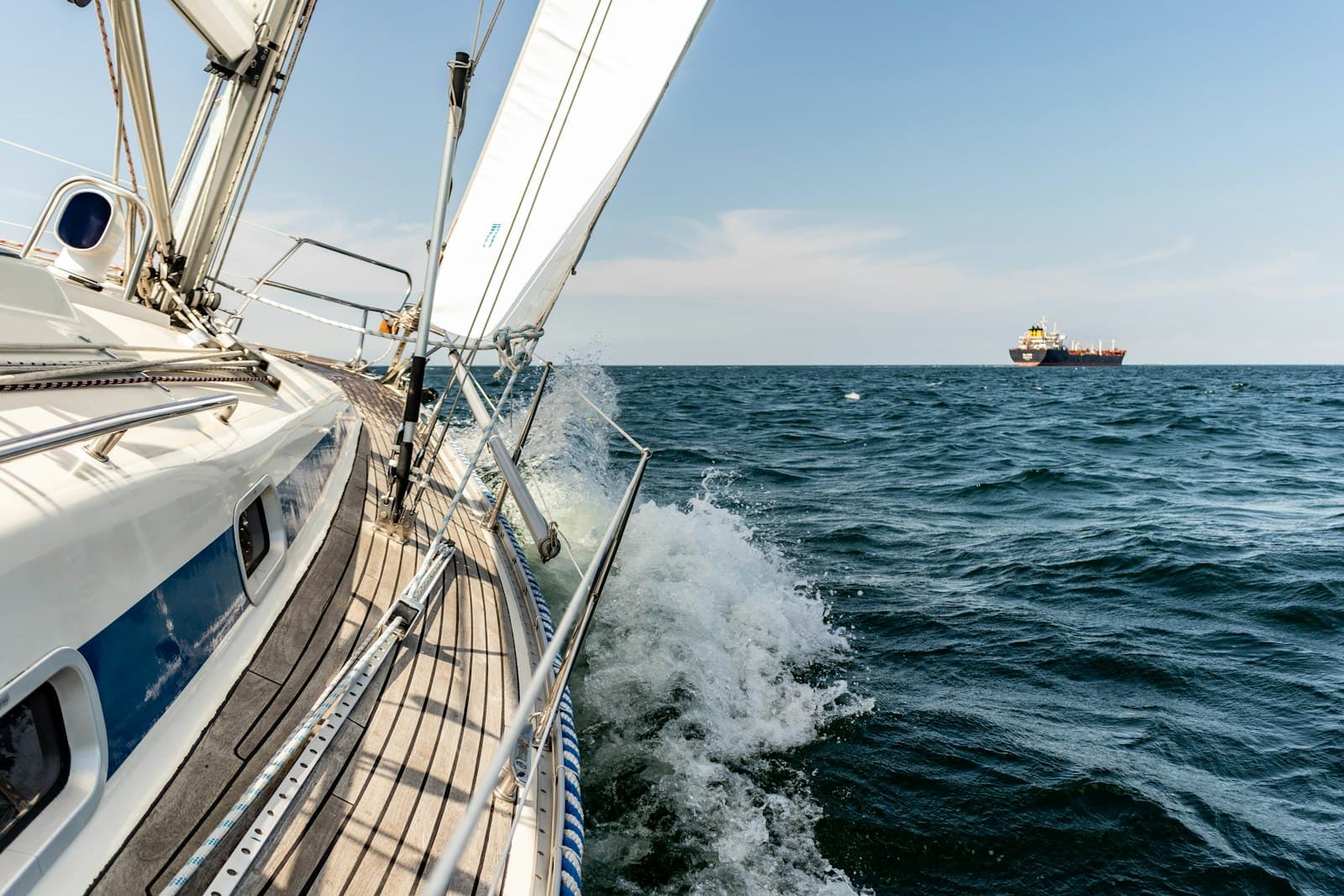
A trade-wind circumnavigation covers roughly 25,000 to 30,000 miles, takes a comfortable three to four years, and costs — boat aside — 2,000 to 4,000 euros a month for a couple or a family. It is neither an athletic feat nor a blank cheque: it is a life project that takes two to three years to prepare, and one that hundreds of families complete every year on perfectly ordinary boats.
The classic route: follow the trades west
The cruising circumnavigation is sailed westabout, pushed by the trade winds. The standard pattern: an Atlantic crossing at the end of the year, a Caribbean season, the Panama Canal in spring, then the great Pacific — Galapagos, Marquesas, French Polynesia — crossed between April and October, outside cyclone season. Fiji or Tonga follow, then a cyclone refuge in New Zealand or Australia. The Indian Ocean is negotiated towards South Africa via Mauritius and Réunion, with the Red Sea route back to the Mediterranean remaining hostage to the security situation of the day. Home via the South Atlantic, Brazil or the Caribbean, and the loop is closed. Every ocean has its window — and the window commands, never your diary.
Two, three or five years: choosing your pace
The 18-month circumnavigation exists — it is the pace of round-the-world rallies — but it turns the voyage into a chain of delivery passages. Three to four years is the family pace: whole seasons in each basin, time to wait for the right windows without forcing anything, school breaks and flights home still possible. Beyond five years you are no longer doing a circumnavigation, you are living at sea — and plenty of people settle into that very happily. The adjustment variable is not boat speed but your relationship with time: missing the Pacific or Indian Ocean window means waiting six months, not six days.
The real budget, line by line
Three lines structure the project. The purchase: most of the family market sits between 100,000 and 400,000 euros — our yacht buying service helps frame that step. The pre-departure refit: budget 15 to 25 percent of the boat's price for rig, energy, safety, electronics and sails — almost always underestimated. Then life afloat: 2,000 to 4,000 euros a month covers provisioning, harbour fees, diesel, communications, offshore insurance and routine maintenance, with expensive basins (Polynesia, Australia) offset by gentle ones (South-East Asia). Keep a re-entry reserve of 10 to 20 percent of the total: selling the boat at the end usually claws a good part of it back.
The boat you actually need
The classic mistake is buying the biggest boat the budget allows, then spending the voyage maintaining it. The right candidate is a robust, simple 40-47 footer that can be repaired anywhere: a well-dimensioned rig, a protected or redundant rudder, genuine load-carrying ability, generous solar power, a proper sea berth. The catamaran wins on family living space and downwind speed; the monohull on purchase and running costs, haul-out options worldwide and upwind behaviour. Both circle the globe without drama. What matters is a boat whose every system you understand — because at anchor in the Tuamotus, the technician is you.
What the families who did it say
The accounts converge on a few points. Schooling works: correspondence courses in the morning, the school of the world in the afternoon, and a community of kid boats that keeps meeting up, anchorage after anchorage, along the whole trade-wind route. Actual sailing occupies only 10 to 15 percent of the time: most of the voyage is made of landfalls, repairs and encounters. The hardest part, they say, is neither heavy weather nor the children, but the permanent logistics and living together in twelve metres of boat. And almost all add the same thing: they came back changed, and none of them regrets it.
Where to start
- Sail first: a full cruising season and a crewed ocean crossing are worth more than every book and forum combined.
- Set a realistic departure date and plan backwards: boat purchase at T-minus 24 months, refit at T-minus 12, trials and shakedown passages at T-minus 6.
- Lay out the budget in three lines — purchase plus refit, monthly living, re-entry reserve — and stress-test it with the cost of ownership calculator.
- Test family life aboard with a three to four week charter, in the Caribbean for instance, before committing the capital.
- Join the circumnavigators' networks: feedback from returned crews is worth gold when the technical choices come.
Frequently asked questions
How much does it cost to sail around the world?
As an order of magnitude, a family commits 250,000 to 600,000 euros over 3-4 years: a boat between 100,000 and 400,000 euros (partly recovered at resale), a refit of 15 to 25 percent of the purchase price, and 2,000 to 4,000 euros of monthly living costs. Tighter budgets exist, on simpler boats.
How long should a sailing circumnavigation take?
Three to four years for most crews: the cyclone seasons of the Pacific and Indian Oceans impose windows that cannot be compressed without turning the voyage into a race. Eighteen months is possible at rally pace, but exhausting. Many crews end up extending by a year along the way.
Do you need to be a very experienced sailor to set off?
Not when the project starts, but yes by departure day: an independent cruising season plus a crewed ocean crossing form the minimum foundation. Mechanical, electrical and rigging skills matter as much as pure sailing — once under way, you are the boatyard.
The surest way to know a boat is to sail her.
Before you buy — or simply to get away this season. Tell us your dates and your cruising area, and we source the right boat through our network of owners and vetted fleets.