Marine electronics: GPS, AIS, radar, fishfinder
GPS, fishfinder, VHF, AIS, radar: the minimum electronics fit, the comfort upgrades, the main brands and realistic budgets to equip your boat well.
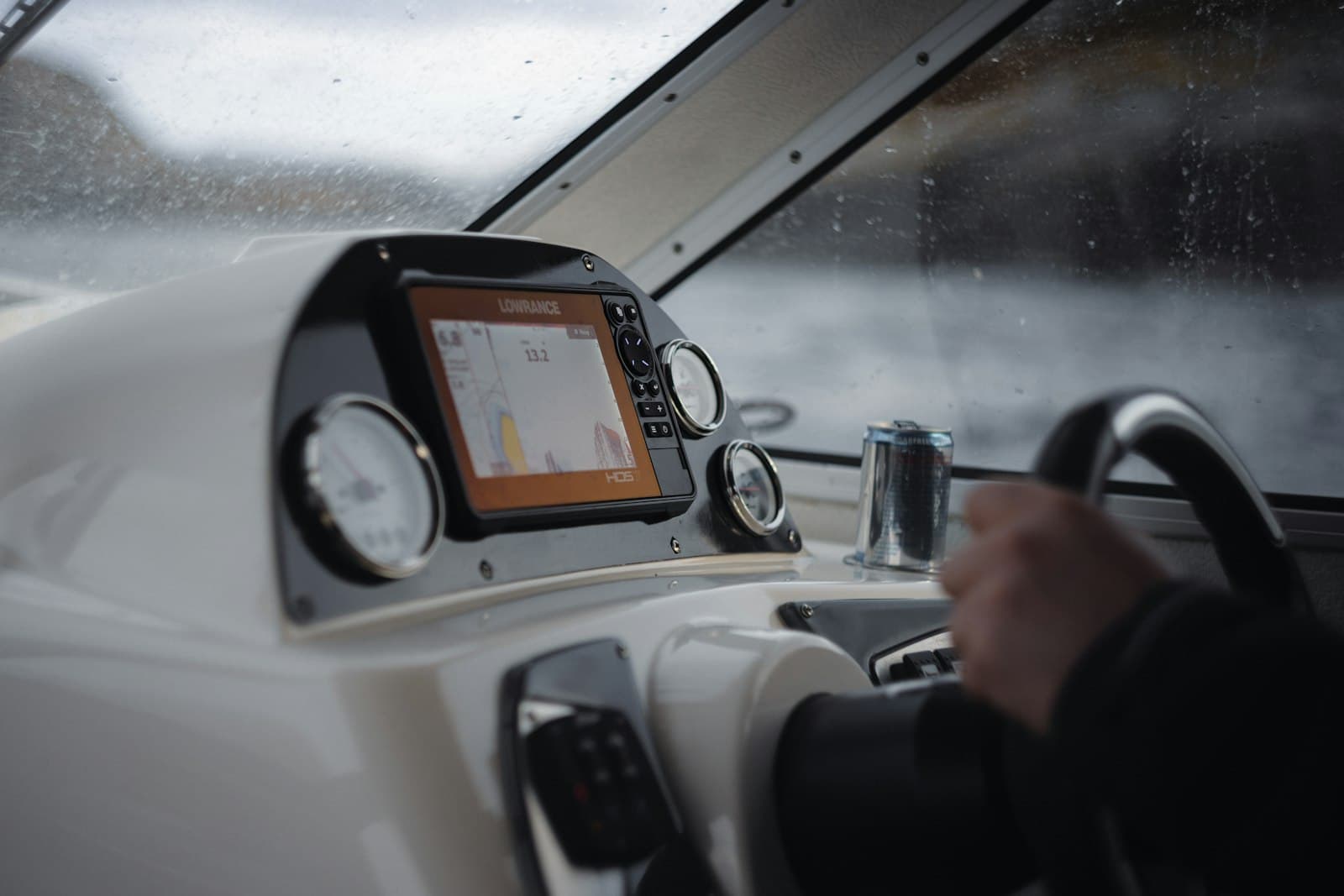
The minimum electronics fit for a cruising boat comes down to three items: a GPS chartplotter with charts, a depth sounder, and a fixed VHF with DSC to alert and communicate. AIS is the next best investment, followed by radar, autopilot and instruments depending on the programme. Expect 2,000 to 4,000 euros to equip a coastal cruiser properly, before installation costs.
The core: chartplotter, sounder, VHF
The chartplotter displays your position on an electronic chart: 7 to 9-inch screens, between 500 and 1,500 euros depending on the brand, cover most coastal needs; charts (Navionics, C-MAP) are bought separately. The sounder, often built into the plotter with a transom or through-hull transducer, is your grounding insurance at anchor and in shallow passes. A fixed VHF with DSC (digital selective calling) sends a formatted distress alert with your position at the push of a button, provided it is connected to the GPS and registered with an MMSI number: our VHF and communications guide covers licensing and good practice. Legal requirements vary with your navigation area and flag state, but the safety case is beyond debate. If the budget is tight, spend on the transducer and antenna installation rather than on screen size: clean data on a small display beats noisy data on a large one.
AIS: see and be seen
AIS (automatic identification system) displays equipped vessels on your plotter: name, course, speed and, crucially, computed collision risk. A simple receiver costs 300 to 700 euros; a transponder, which also makes you visible to others, 700 to 1,500 euros. At night, in fog or near shipping lanes, this small box transforms the experience: you identify a container ship 10 miles out and know immediately whether to alter course. Its limit is structural: it only shows transmitting vessels. Small fishing boats, unequipped leisure craft and floating obstacles remain invisible.
Radar: eyes in the fog
Radar detects everything that sticks out of the water, transmitting or not: coastlines, buoys, wooden boats, rain squalls. Current 18 to 24-inch dome antennas, between 1,500 and 3,500 euros, draw little power and offer automatic target tracking that flags collision courses. It is the instrument for night passages, fog-prone areas and tricky landfalls. Its real demand is not financial: a poorly tuned or poorly read radar gives false comfort, and learning to interpret the screen is part of the investment. Practise in clear weather, matching what the screen shows with what your eyes see, so the picture already makes sense the first time fog closes in.
Autopilot and instruments
The autopilot holds the course while you trim sails, prepare a manoeuvre or simply catch your breath: short-handed, it changes life aboard more than any display. Expect 2,000 to 5,000 euros installed, depending on boat size and drive type. Around it sit the instruments: wind vane and anemometer, speed and depth logs, cockpit repeaters. Everything now talks over a standardised NMEA 2000 network: insist on it for any installation, as it guarantees you can mix and upgrade equipment later. Garmin, Raymarine, B&G, Simrad and Furuno dominate the market: all make good hardware, but staying within one ecosystem simplifies integration and after-sales support.
The tablet: the best second screen, never the first
Tablet navigation apps offer superb charting for a few dozen euros a year, and many sailors plan routes on them in comfort. At sea, the tablet is a remarkable second screen and a valuable backup. It does not replace a fixed plotter: limited battery life, screens unreadable in direct sunlight, uncertain waterproofing, sometimes mediocre internal GPS and summer overheating are all potential failures at the worst moment. The simple rule: the tablet assists, the plotter commands — and a waterproof case plus a dedicated 12-volt charging point turn it into a credible emergency fallback. Route planning and app choices deserve their own guide — see charts and electronic navigation.
Typical budgets and where to start
Three levels of fit-out emerge, installation included:
- Minimal coastal: 7-inch plotter, transducer, fixed DSC VHF — 2,000 to 4,000 euros.
- Equipped cruiser: 9-12 inch display, AIS transponder, autopilot, wind instruments — 8,000 to 15,000 euros.
- Offshore: double the displays, add radar and a second autopilot or spare drive — 15,000 to 30,000 euros.
Start by writing down your actual programme rather than comparing catalogues: night sailing implies radar, solo sailing demands the autopilot, summer coastal hopping is fine with the core. Check what the boat already carries and how old the network is: wiring from the 2000s often costs more to adapt than to replace. And build renewal into your overall budget with the cost of ownership calculator: electronics age fast — plan a refresh every 10 to 15 years.
Frequently asked questions
What is the minimum electronics for a boat?
For a cruising boat sailing coastal waters: a GPS chartplotter with up-to-date charts, a depth sounder and a fixed DSC VHF connected to the GPS. This core covers positioning, grounding avoidance and distress alerting. Exact legal requirements depend on your navigation area and flag state; AIS and radar come next depending on the programme.
Do I need an AIS transponder or just a receiver?
A receiver is enough to see equipped vessels and compute collision risks, for 300 to 700 euros. A transponder, at 700-1,500 euros, additionally makes you visible to others: a cargo ship can then identify you and anticipate. For night sailing, offshore passages or busy traffic areas, the transponder is clearly worth the extra cost.
Can a tablet replace a GPS chartplotter?
As a second screen and backup, yes, and very well: navigation apps are excellent for planning and following a route. As the primary system, no: battery life, sunlight readability, waterproofing and internal GPS reliability do not match a fixed marine plotter. Best practice is to run both, with the tablet as the complement.
Reading is the easy part. Then you have to decide.
A boat purchase turns on what you cannot see: the real history, the state of the hull below the waterline, how much room there is to negotiate. We represent you — independent of any seller, paid by you alone.